2021

2021

Twinning in Cattle

Periodically over the years there have been those who advocated increasing the incidence of twinning in cattle as a means of improving profitability per cow. The idea was that double the number of calves per cow per year would double the financial return. As usual, when something appears too good to be true, it is.

As a practicing Veterinarian, in my second year after graduating in 1973, I felt obligated to address this false claim. My first article on the subject was published in the January 1975 issue of the Milking Shorthorn Journal. In the intervening 46 years, cows have not changed and twins still represent a significant threat to the health and wellbeing of both cows and calves. So, with some minor editing, that article is reproduced here.


In 1974, there appeared an article advocating selection of cattle for twinning written by the University of Wisconsin Extension Service which cited the work of J. J. Rutledge, a geneticist at the University of Wisconsin. After recounting stories of various cows who made a habit of producing multiple births over the past 150 years, he concluded with the statement that ". . . in a protein hungry world, another 350 to 400 pounds of calf weight per cow might out-weigh the extra trouble of twinning . . ."! That was not true in 1974 and remains a fallacy today.

Basically, there are two types of twins, monozygotic (identical) and dizygotic (non-identical). Identical twins arise when a fertilized ovum splits and develops into two separate individuals. Identical twins are always the same sex and possess much the same color patterns, hair coat characteristics and productive abilities. They account for four to six percent of all twins and the incidence of identical twins is not particularly influenced by heredity.

Non-identical twins develop when the female ovulates two fertile ova which are subsequently both fertilized. This type of twins accounts for the vast majority of all twins and it is influenced, to some degree, by heredity.

Cows who are themselves twins have daughters with a tendency to produce twins more frequently than daughters of non-twinning cows. The repetition of multiple births in a cow is an indication of multiple ovulations. That tendency is passed on to the daughters. Twins occur about 1% of the time in beef cattle and about 4% to 5% of the time in dairy cattle, although certain breeds of cattle can have somewhat higher percentages. Primiparous dairy heifers average about 1% while aged Holsteins can approach 10%. Controlled breeding strategies, popular in dairy herds today, have reduced the incidence of twinning which has confused estimates of heritability.

Heritability is assumed to be low at between 0.01% and 0.09%. Heredity for double ovulations is similarly low for a single estrus cycle but over multiple cycles rises to about 0.35%. While somewhat difficult to understand, it does suggest that the same cow is likely to ovulate more than a single ova over multiple cycles. By selecting for twinning, some herds have increased the incidence to as high as 29% so it is clear that if twinning is deemed desirable, genetic means for increasing the incidence are available.

However, twinning significantly increases the demands on management in addition to detrimental effects on the cows. Dr. S. J. Roberts, writing in Veterinary Obstetrics and Genital Diseases, published in 1971, made the following statement:

"Multiple births or twinning in uniparous animals (cattle and horses) is undesirable and in most cases pathological and often disastrous to the dam as well as the fetus. Twinning represents an economical waste or loss and is a reflection of genital disease rather than health."

Twin gestations are generally about 5 days shorter than for single births. Twins are smaller, being up to 45% lighter for bull twins and up to 50% lighter for heifer twins. Twin pregnancies are a significant cause of abortion, stillbirth, and dystocia, with many needing assistance during delivery. Twins are typically less vigorous at birth and three times as likely to die at a young age. Finally, half the twin births are of mixed sex and 92% of those heifers born twin to a bull are sterile. Some of the bulls also exhibit reduced fertility or even sterility.

The detrimental effects of twinning often begin at conception. Of 600 ovulations in a herd of cows that were studied, 13.1% were double ovulations however only 1.92% twins were born. This represents a 14.6% conception rate. Cystic ovarian disease is also associated with double ovulation and twinning. It is common for a cow recovering from cystic ovaries to conceive twins suggesting that selection for twinning might increase the incidence of cystic ovarian degeneration and impaired fertility, especially in older cows.

It is estimated that up to 50% of all twin pregnancies terminate in abortion, either as early embryonic death or delivery of stillborn calves prematurely.

Following twin births or abortions, delayed uterine involution, retained placenta, and septic metritis are common which adversely affects subsequent fertility or can cause outright sterility. Calving interval following twinning is often prolonged. In dairy cows, milk production is often reduced. Dam mortality is also increased. After nearly 50 years of personal observations, twinning cows have over 50% more problems than single birth cows.

After considering all of the negative effects, it is impossible to wean an additional calf, on average, for every cow that has twins. Statistically, in fact, the average number of calves weaned from twinning cows is less than one—this is not a useful economic proposition in any operation, not to mention the additional management headaches.

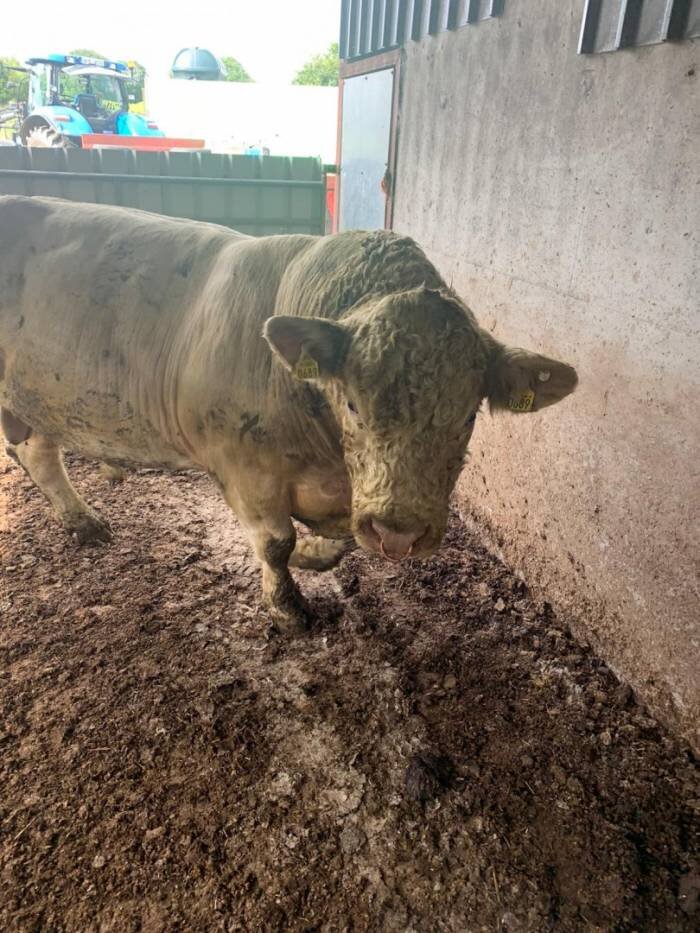
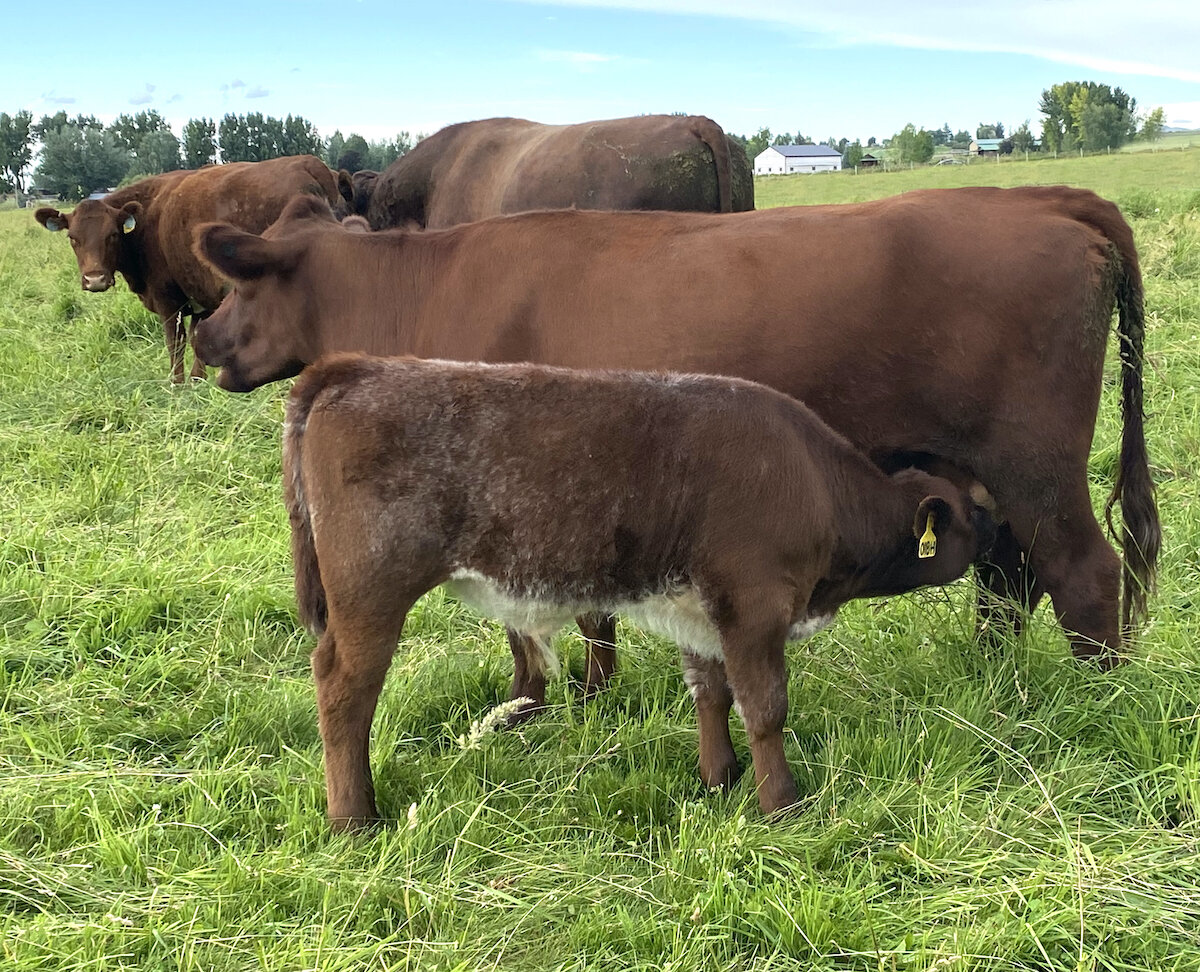
The primary goal in raising cattle—healthy calves.


Author Profile: Dr. Martin Lee

Martin Lee was raised on a small registered Milking Shorthorn dairy, and graduated from Colorado State University with a DVM degree in 1973. He was in general veterinary practice after graduating, but since 1978 he has operated Idalee Veterinary Services, specializing in Dairy Consulting in Jerome, Idaho. He was the owner of Idalee Milking Shorthorns, which was the highest producing Milking Shorthorn herd in the world for many years between 1996 and 2006, until the herd was dispersed in 2006. One of his cows, Idalee Garnet Topsy-EXP, still holds the record for highest lifetime production for a Milking Shorthorn, with 318,330 lb. milk over 11 lactations. He currently has a herd of Beef Shorthorns with approx. 30 cows plus young stock and bulls, but in addition he still has 2 Native Milking Shorthorns.

Martin and his wife Susan Lee have each served multiple terms on the AMSS Board of Directors, and have each been National Presidents of AMSS. Susan Lee has also been very involved with dairy improvement and she has served terms as Director and as President of the National Dairy Herd Improvement Association. She currently manages the Idaho DHIA. Martin and Susan have a son and a daughter, plus 5 grandchildren.

2021

From One Inn to Another

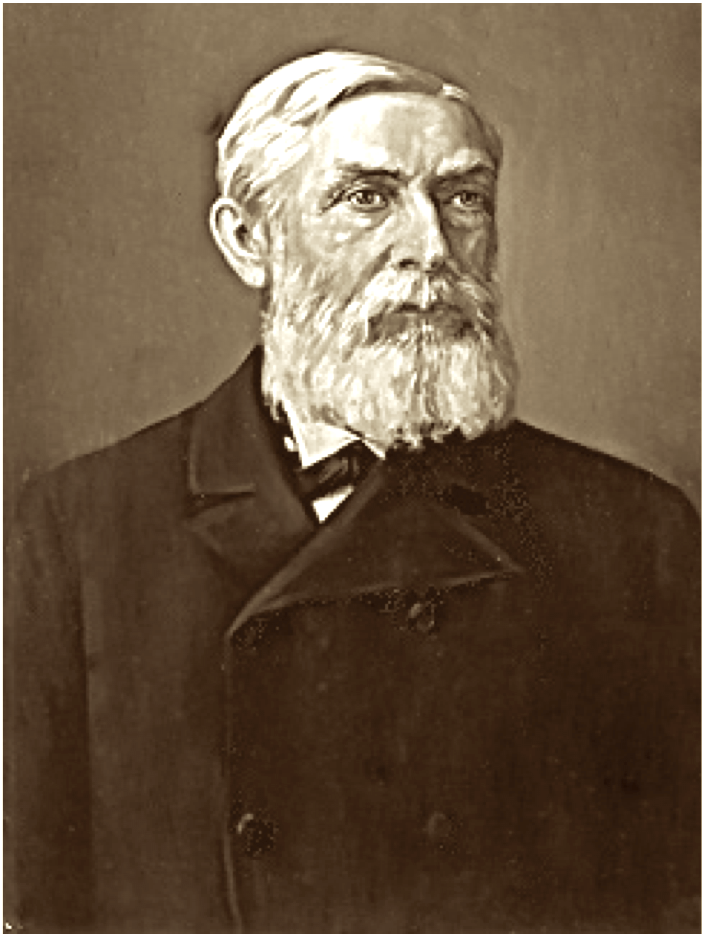
The picture in my mind today is as vivid as when I first saw it over 50 years ago. I had attended the Chicago stock show and upon leaving well after dark, I headed north out of the Amphitheatre parking lot to get on Exchange Avenue. In the process I passed by the old Stockyard Inn and glanced up to a 3rd floor window where I noticed the warm yellow glow of a single light illuminating the portrait of some distinguished gentleman from long ago. I would soon learn that this portrait was just one of nearly 300 that made up the collection known as the Saddle and Sirloin Gallery. This unique group of portraits had been established in 1903 to honor people who had made a significant impact on the livestock industry over the years past. In this little article I would like to give a brief overview of three members of this elite group who either involved Shorthorns in their operations or made an impact on the breed by other means. My biggest challenge has been to condense the lives of three men who lived big into a few paragraphs and still express the scope of their accomplishments.


Felix Renick.png

Felix Renick

1770-1848

Felix Renick was born near the Potomac River in West Virginia, an area that was considered the western frontier at that time. Besides the typical hardships of frontier life his family experienced brutal murders and kidnappings by the Shawnee. Despite these tragedies that would cause most to retreat to safer environments, Felix did the opposite and set out as a young man to explore the Ohio territory. After a thorough investigation of the future state, he finally settled in the Scioto River Valley near the present day town of Chillicothe.

Felix soon embarked in the cattle business and developed a reputation for quality cattle that were driven overland to the markets in eastern cities like Philadelphia and New York. The genetic makeup of these cattle was primarily a combination of English and Spanish longhorns. The amount of Shorthorn blood involved at this point if any has been disputed by the statements of Renick’s contemporaries. Renick soon realized that there was room for even more improvement in his cattle and he began to investigate other breeds that might augment his breeding program. This involved correspondence with leading cattlemen on both sides of the ocean and led to the decision to make a trip to England to import improving cattle. In 1833 an importing company was formed and shares were sold to approximately 30 of the leading cattlemen in the state and even a few government leaders who could see the value in agricultural progress. The following year Felix Renick accompanied by two other shareholders set off for England, their only charge to purchase cattle regardless of breed that would improve their herds. After a careful study, visits to many English herds, and knowing the traits they wished to strengthen in their own cattle, the decision was made to come home with all Shorthorns. In October 1836 at the Renick farm, these imported cattle were sold in the first known purebred livestock sale in the US. These cattle were widely dispersed throughout Ohio and Kentucky and some of the most famous Shorthorn cow families like the Rose of Sharons and the Young Marys were established from cattle purchased in this sale.

In 1922 the Ohio Shorthorn association dedicated a monument on the site of that original sale commemorating the occasion. The monument has since been moved but is still located near the old Renick farm at Chillicothe.

In later years Renick continued in his forward thinking and was quite active in various businesses and public endeavors. He was named president of a railroad, the Plymouth Turnpike, and made a board member of the Ohio Historical Society to which he had made important contributions including maps of Indian villages he had drawn on his first scouting trip of Ohio. Renick met an untimely death at the age of 77. While waiting on a ferry, a supporting timber for that ferry fell on his carriage and crushed him to death. In 1903 Renick was rightfully honored as a member of the first class inducted into the Saddle and Sirloin Gallery.


Conrad Kohrs.png

Conrad Kohrs

1835-1920

The look on the Librarians face told me I needed to refine my search or it wasn’t going to be a good day for anyone. A few years prior I had made a visit to the Grant-Kohrs Ranch at Deer Lodge and had purchased and read the Kohrs autobiography. That book covered his life through the year 1900.Intrigued by what I had read, I was at the Montana State Library in Helena this day hoping to learn something about the last 20 years of his life. Based on that facial expression received from the Librarian, I decided to narrow my search to the period of 1916 to 1920. I stared in disbelief as 6 big rolling files were brought out to the research table I was to use.

Known as the ‘’Cattle King of the Northwest’’, Kohrs ran large herds of cattle in 5 states and Canada. Estimates of his cattle numbers ran between 35 and 40,000 head during the peak years of his operation. His business was vertically integrated from seedstock to finished beef products and he was involved in the banking and mining fields in a big way as well.

At the age of 15 Kohrs left home and went to sea and had it not been for an injury suffered at sea he might have become a shipping magnate. During his recovery from this injury he stayed with a brother in New York city and when able worked in a butcher shop. This would prove to be valuable experience for Kohrs in the near future. As time went on Kohrs began to hear the stories of the gold strikes out west and soon headed there to make his fortune.

It didn’t take long for Kohrs to figure out that there was more money to be made supplying the miners than in the small scale mining he was able to accomplish. Armed with an old saw and bowie knife he hired on as an assistant butcher. His boss recognized his business abilities and Kohrs was soon managing this shop. It was not much longer before he became owner and Kohrs developed a chain of butcher shops to serve the various mining camps in western Montana. As his business grew Kohrs found himself spending more and more time procuring cattle and he established herds of cattle at various locations to supply the growing demand from his shops.

Eventually the mining boom faded and Kohrs closed up his butcher shops but continued to build his cattle operation. This began an era of large cattle drives to the nearest rail heads for shipments to the Chicago stockyards. As he entered this new phase of his business, Kohrs established a high grade unregistered Shorthorn herd to supply improving bulls to both his own herds and other western ranchers. When this herd was sold a short time before his death this herd numbered over 600 head and sold to one rancher in Alberta. Later a purebred Hereford herd was established as well. Kohrs was impressed with the first cross of these two breeds but less so with subsequent crosses most likely due to the diminishing hybrid vigor, and he remained a staunch believer in the Shorthorn breed.

There are so many stories that could be told about the life experiences of Conrad Kohrs, many that I am sure formed the basis for a lot of Hollywood westerns. The rolling files I mentioned earlier were loaded with a wealth of sound business principles, breeding program guidelines, and many mentions of close friends including a U.S. president. Kohrs was a cattle baron but he did not fit the stereotype. From his own meager beginnings he could empathize with the down and outer. A case in point would be the time Kohrs was making an inspection of one of his ranches. The ranch foreman rode up and informed Kohrs that a local homesteader had poached and butchered one of his steers. Kohrs took off in his carriage and headed for that homestead. As he approached he could see the poverty in front of him as well as a hide clearly bearing the CK brand. The homesteader and his family came out of their shanty and Kohrs got right to the point.”Did you shoot my steer?” ‘’Yes, replied the homesteader. ’’Why did you do that?” ‘’We were hungry’’, replied the homesteader. At this point Kohrs stood up in his carriage and in a loud voice exclaimed,’’The next time you get hungry shoot another one! ‘’

On the cover of the Kohrs biography there is a picture of a herd of 3500 plus Shorthorn steers being readied for shipment. A painting had been made of this picture in the early 1900’s and given to the Saddle and Sirloin club where it was displayed until it was apparently destroyed in the 1934 Chicago Stockyards fire.


Wm Van Natta.png

William Van Natta

1830 -1911

In west central Indiana about 25 miles southeast of where I am writing this, there is a little town known as Earl Park. This town is significant for a couple reasons. First, this area is the eastern most point of what the early French explorers named the Grand Prairie. This contiguous prairie covered parts of four states terminating in central Nebraska. Earl Park is also the point where three large cattle ranches covering over 80,000 acres between them came together. These herds operated for most of the 19th century and ran 2000 mother cows each. One of these owners was Moses Fowler. Fowler was quite an entrepreneur and owned many businesses. One of the keys to his success was the practice he had of finding qualified people to run each of these operations. William Van Natta was tapped by Fowler to run his ranching operations.

Over a period of time Van Natta began to notice the occasional Hereford influenced animal that showed up from time to time would excel in the feedlot. This intrigue led to further investigation and ultimately resulted in the establishment of a purebred Hereford herd under the name of Fowler and Van Natta. Over 100 animals were imported from England to establish this herd and it soon became one of the leading lights in the young Hereford breed in America. An advertisement boasted of carload sales to Wyoming of over 200 bulls in one shipment and the herd began to dominate in the show ring as well.

Upon the death of Moses Fowler, Van Natta purchased much of the partnership breeding stock and continued on under his Hickory Grove Stock Farm name. Van Natta was instrumental in forming the Hereford Association and became its second president. Due to his success in the Hereford breed Van Natta became a much sought after cattle judge and with that point made we can now make our Shorthorn connection.

At the 1904 Chicago International Shorthorn show, Van Natta was part of a three member judging panel placing the classes that day. As the aged bull class entered the ring a white bull immediately caught his attention. I can imagine the thinking as a breeder producer, Van Natta saw this bull as an animal that could improve the short comings of the breed at that time, although it was maybe not the perfect animal to fit the mold of the day. His dismay was quite apparent when he discovered the other judges had chosen another bull; in fact he was so upset he refused to sign off in the Judges book. Think about how many collectors items there are that are valuable for not having a signature. If you dug hard enough, you might be able to find the name of the bull that won that day. Van Natta’s bull, the incomparable Whitehall Sultan, dominated the Shorthorn breed for the next 50 years and once again made the Shorthorn breed a player in the U.S. commercial cow herd.


Chicago to Louisville

In January 1977 I Iearned that the Stock yard Inn in Chicago was to be torn down. At that time I only lived about 35 miles away so I decided to go and see it one last time. It had been closed for a while so you can imagine my surprise when I walked up to a door and it opened. I took the liberty of walking in and spent the next couple hours wandering through the old building. The portraits were gone but the old clock in the Lobby had yet to be removed. It was eerie walking down the long dark halls as I imagined what stories could be told if those old walls could talk.

Flash forward to the year 2008. I was on my way back to Illinois after delivering a mare to Kentucky to be bred. Knowing the Executive Inn in Louisville was to be torn down that year, I decided to stay one last night there and tie into their famous brunch the next morning. The Executive had been the Shorthorn Headquarters for many years during the North American Stock Show and had an old world flavor to it much like the old Stock Yard Inn.

The next day before leaving I decided to walk across the street to what was then called the Executive West Hotel. When the Saddle and Sirloin Gallery was moved from Chicago to Louisville there wasn’t room at the exposition center for all the portraits to be displayed so a fair number were on display at this hotel. As I walked down the long hallway where they were displayed, I started to keep my eyes open for a particular portrait. Most of the newer inductees were located here and a person who had a long term association with the breed recently had his portrait added to the gallery. I made one trip down the hallway without finding the portrait in question. I decided to make one more pass thinking I had simply overlooked it. Walking down the hall the second time I soon ran out of portraits. With no sighting, I decided to continue to the end of the hall to the double doors that led out to the parking lot. As I reached for the door handles, for some reason I turned around and saw to my left an open alcove area that apparently served as a janitors station. As I looked into the room I saw it! There on the far wall of the closet, nicely centered over a janitors sink and garnished by mops and brooms was the missing portrait. (He was a former executive secretary of the ASA, and based on my limited exposure to him I believe he had probably crossed someone, and I don’t believe the location was a random janitorial decision).

The end.


Author Profile: Gary Kaper

Gary is a Registered Shorthorn breeder located in Watseka Illinois. He started his herd in 1973 and today the entire herd traces many times to the original cows purchased at the herd’s beginning. Over the years semen and breeding stock from this herd have been sold into 21 states, Canada, and Australia. Data collection has always been a priority and over the years several performance awards recognizing maternal efficiency have been received by individuals in his herd. In his “spare time” Gary is an avid Shorthorn historian.

2021

Do Your Photos Sell Your Cattle?

Market Your Cattle With Better Photographs

Cow & 2 calves.jpeg

As the old saying goes, “a picture is worth a thousand words”, and a bad picture can say many negative things about your cattle, which may not be true. If you are trying to sell cattle, does the photo which you are putting in the ad or on social media encourage potential buyers to contact you about buying your cattle, or does the photo make the cattle look so bad that they won’t bother to contact you? Do the photos encourage viewers to say “I want one of those!”

Or will they say “Why would I want cattle that look (or act) like that?”

Bad angle, dirty.jpeg
 
wild cow & dogs.jpeg

Top end producers know the advantage of having flattering photos which is why they hire a professional animal photographer; but if you are taking your own photos, you can enhance the eye-appeal of your cattle. It’s not necessary to be a great photographer to have better photos, but it is necessary to take a few extra minutes to look at the surroundings, decide on a good angle of view, wait for a reasonable pose, and then take multiple photos so that you will have a variety to choose from. With animals, the hard part is getting them to stand in a reasonable pose in a setting that’s not too cluttered. If you manage to get a reasonable picture of an animal in a good pose, then a few easy, basic photo editing adjustments can be done to improve the photo. Alternatively, if the pose is terrible then it’s unlikely that any amount of photo editing will help clinch a sale or enhance your online page.


Steps to a good photo:

#1. Consider your potential buyer/market—commercial operator, vs small family farm, vs freezer meat buyer, vs ? Highlighting a beefy rear end might appeal to a commercial buyer, while “cuteness” or “docility” may sell to a small acreage farm family, or an udder photo to a small dairy.

Rear end shot.jpg
_DSC0861 2.jpg
Image 4.jpeg

#2. Look at the animal(s) and ask yourself:

a. Is this animal (or group) in reasonable body condition?

b. Is one side of the animal cleaner/more presentable?

#3. Choose an area and direction which give a less cluttered or more picturesque background.

a. Check the lighting source & direction—try to avoid really dark shadows.

b. Can you easily see the entire animal, or is it partly hidden or deeply shadowed?

Dark Shadows, 2.jpg
Hidden by grass.jpg
Panels overlay.jpg

#4. Wait for a reasonably good pose.

a. Are feet & legs positioned in a good stance?

b. Is head up, down, or turned away?

c. Are you positioned for a good side view, or is it an odd angle which makes the head look abnormally large while the rear end looks small and scrawny?

#5. Snap multiple photos over a period of several minutes, because most will have major “issues”.

Odd pose.jpg

#6. Review the photos, and reject the really bad ones.

Look closely at the animal in your photo. Many cattle photos will need to be rejected because of transient problems: head turned away, mouth open from chewing cud, tail flicking at an odd angle, stance of rear legs making them look too straight/post legged, or odd bend to front leg, etc.

#7. Do a few simple photo edits on your phone, or on your computer.

a. Crop the photo to eliminate unnecessary or distracting background.

b. Adjust the photo lighting/exposure to brighten it if it’s too dark.

c. Increase the contrast slightly if there is glare or the colors look washed out.

d. (Many additional editing steps can be done to enhance a photo, but they are beyond the scope of this article.)

_DSC0650.jpg
_DSC0650 copy.jpg

#8. Finally, ask yourself: “Does this photo do justice to what I’m trying to sell and entice prospective purchasers to call or email me about this animal?”, or do I need to start over to get a better picture? Spending a little more time on obtaining a better photo may allow you to obtain a higher selling price for that animal!


Author Profile: Susan Schallberger

Dr. Susan Schallberger is a (mostly) retired veterinary radiologist & ultrasonographer. She is the Office Manager and the Website Pages Creator for the Heritage Shorthorn Society. While Sue is not a professional photographer, she spends considerable time evaluating and upgrading the many photos which are used on the HSS website. Sue and her husband, Joe, raise Heritage Shorthorns in Western Oregon.

2021

Raising Shorthorns for Working Oxen, a Growing Niche Market

Oxen played a vital role in the establishment of this country as they cleared forests, hauled rocks, dug foundations, plowed, and fertilized fields and eventually converted to beef at the end of their working life. No breed did this better than the Shorthorn. With their agreeable temperament, longevity and versatility, the shorthorn was the essential triple purpose breed, pulling their weight in the fields and the milk parlor as well as giving a good return with their fleshy carcass. Here in New England no breed has been more sought after for working oxen. Thanks to a resurgence in the use of draft animals as tractive power on small farms, shorthorn breeders may be able to capitalize on this niche market by breeding for traits desirable in working cattle.

A working steer is a castrated bull who has been trained to work in the yoke and is not considered an “ox” till four years of age. In order for a steer to hold up under working conditions he has to have good conformation otherwise he is likely to experience injury and subsequent culling. Considering the time and effort that goes into training and making a team “handy”, teamsters tend to be quite selective in their search for desirable traits. The traditional shorthorn lends himself well to a life of work, but some selective breeding may make your calves more attractive to a teamster.

Screenshot_20201230-070350_Gallery.jpg

An ox is an athlete, and he should look like one. If you were looking for a new herd sire you would likely require many of the same attributes of a potential ox. We want em “square as a brick and smooth as a trout”. Strait legs, heavy of bone with toes pointed forward are important to a comfortable gait and lend themselves to natural wearing of the feet. Well-muscled hind quarters with a long strait back help to transfer his momentum forward to the business end of the ox. Most of his power is in his neck and shoulders and this is where the yoke sits to capture that power. Wide and deep shoulders create a pocket, between the neck and the point of the shoulder, where the neck bow will rest in a heavy pull. A thick and heavily muscled neck makes a good bearing surface for the yoke and bows. Finally, he must be equipped with horns which are critical to keeping the yoke on his neck. On a downhill grade the yoke would be pushed off over the head as he attempts to hold back a load if he does not have horns. Aesthetically, it is preferred that the ox have a well-kept set of horns.

It has become increasingly difficult to find shorthorns that fit the traditional standard laid out above. Gone are the days of the dual or triple purpose breeds and few are the farmers who breed cattle with working qualities in mind. Animals are bred with a singular purpose in life and in cattle that usually means producing milk or beef. The shorthorn has not been immune to this modern specialization and has diverged into the Beef shorthorn and the Milking shorthorn. Here in New England, we have always turned to the Milking Shorthorn herds for our working cattle as they have retained a more angular build and the horns have not been bred out of them. Unfortunately, many Milking Shorthorn herds are being influenced by Red Holstein breeding to increase milk production. In short, they are losing the draft, or those qualities that make them desirable as oxen.

20190416_193407.jpg

If you live in New England, you will have an advantage when trying to market bull calves for oxen due to the traditional ox culture that exists in this region. In my area of Maine, if you had quality shorthorns and the word got out teamsters would be calling you every spring looking for new prospects for their working and show teams. In my own case I bought a two-month-old pair of mated calves for a thousand-dollar bill. Not a bad return for an animal the farmer had little invested in as it had been fed primarily on its mother up to that point. In this case the old yankee was a retired dairy farmer who still had pasture to maintain so he built a small herd of shorthorns just for the purpose of making and selling young teams of cattle. My team is now 2.5 years old and quite sharp, at least according to my neighbors who retrieved them after they discovered there was no “fire “in the electric fence and jogged down the road drawing public curiosity.

VideoCapture_20201230-070639.jpg

For those living in other parts of the country this niche market might be tougher to break into but thanks to the internet and the advertising/ networking opportunities therein, a farmer could still find a home for a working steer. I’d look at printed publications as well, those that focus on small scale sustainable farming like The Small Farmers Journal, or Rural Heritage. These magazines cater to those who still use live animal power to get things done and might be a good resource to help build a reputation as a quality breeder of the shorthorn. Another resource is Tillers International out of Michigan. They have a website and work with small farmers the world over to help develop sustainable agriculture based on draft animals, they seem to favor the Shorthorns as well from what I’ve seen.


Author Profile: Gregory Mitchell

My wife and I, and our four children live in Southern Maine where we dream and aspire to be farmers. Our approach is old school diversification, supplying our household with as much home-grown food as we can. We keep pigs, chickens, and grow a large garden. For ten years I have maintained a small logging outfit using my draft horses and now my pair of Shorthorn steers. This fall we expanded our dreaming potential with the purchase of a 73-acre homestead. This is my mutual fund. A place where things will continue to grow and chug along even amid a disaster like Covid-19. Honey, maple syrup, and a family cow will further diversify our portfolio in the next year or so. The cow will be a Shorthorn of course, and perhaps the start of a small herd of old school Shorthorns!

This photo is from the Fryeburg Fair, Maine  Facebook page.

This photo is from the Fryeburg Fair, Maine Facebook page.

2021

Cow Efficiency: The Aspects of Maternal Cattle

(This well -written and thought-provoking article was from a lecture given by Roy Beeby at a Parley for Progress Seminar in Cloves, New Mexico in 1994. Mr. Beeby was a respected Red Angus breeder in Oklahoma who gave lectures and wrote articles on a variety of cattle breeding topics. This article and the photos of Shorthorn cattle were shared with HSS by Ralph Larson of Y Lazy Y Shorthorns in Montana.)

The textbook, History of Cattle Breeding In the United States, reveals that the commercial industry has intermittently turned to breeds of cattle or herds within breeds that could solve periodic economic problems. Problems that surface in the beef industry stimulate change. Another change in cattle breeding priorities may be close at hand.

Let me tell you a story about an attitude that was changed. There was this mining town and on main street in front of the saloon a young Gunfighter was bullying people around. He was shooting at people's feet and making them dance. The young Gunfighter looked up on the mountain road above the town and saw an Old Miner leading a pack donkey coming into town. When the Miner tied his donkey in front of the saloon the young Gunfighter said, "Old Man dance!" and he shot at the Miner's feet. The Old Miner did a little jig. Every time the young Gunfighter fired at his feet, the Old Miner danced, but he was counting the shots. When the Gunfighter had fired his last shot, the Miner pulled his double barrel shotgun from his pack and pointed it at the Gunfighter's temple and said, "Young man have you ever kissed the rear end of a donkey?" The young Gunfighter said, "No!, but I've always wanted to!" He had a change of attitude.

Purebred Breeders may need to change some of their attitudes and breeding priorities to meet the needs of the commercial cowman in the near future. When a trend develops for a certain trait among cattle breeders a race often begins. Purebred Cattlemen chase traits in popularity trends like Fox Hunters pursue their prey. With disregard to where they are going, they follow the lead dog and no one is guarding the HEN HOUSE. The cow herd's production often suffers. Extremes are not good for the cow and calf producer.

An example of this happening is after World War II. It was perceived that the House Wife wanted smaller cuts of beef. So it became popular in the Show Ring to select smaller cattle. Short legged compressed cattle started to win the shows. The classes were lined up from the smallest to the largest. As compressed bulls were used in Purebred Herds, dwarfs began to be born in Registered Herds. This caused breeders to swing the other direction. As Breeding stock approached the optimum in conformation, the continental breeds were introduced in America. This further accelerated the British Breeds to strive for size and height, so they could compete in the show ring. As purebred cattle became bigger and taller, heifers became slower maturing sexually. Calving trouble was more frequent. Cows required more feed for maintenance and maternal traits suffered again.

Selection for extremes, whether it be extreme frame, extreme weight, extreme muscling or extreme milk production is fairly easy, and rapid progress can be made by selecting these traits. Remember, however, that nature selects against extremes and unless rapid change is needed, extremes in type really aren't necessary. The only time you should select for maximums in maternal selection is for maximum reproduction.

In Animal Breeding, procedures to improve traits is a gift of science. Combining the traits harmoniously into an animal is a work of art. It should not be surprising that a change in one trait can cause changes in other traits.

Sir Isaac Newton's third law of motion states: "For every action, there is an equal and opposite reaction." This law of physics may not be completely applicable to animal breeding. However, it can remind us that a change in your breeding program should be evaluated for the total effect of all traits of economic importance.

A quotation by Emerson can be applied to Maternal Selection ... "In many Endeavors, the line between success and failure is so fine that we scarcely know when we pass it...So fine we can be right on the line and not know it."

 
Red cow & calf copy.jpg


The title of my talk COW EFFICIENCY, THE ASPECTS OF MATERNAL SELECTION was assigned to me. So I looked up the meaning of ASPECTS and saw that it is an idea or problem regarded from a specific viewpoint.

I'm not a Professional Animal Scientist or a Meats Expert nor am I a Show Judge. I have never been able to out show Steer Jockeys. I am not a stocker operator or a commercial feeder. I am a Cowman and what I have to say is from one Cowman's point of view.

My remarks about Maternal Selection are more applicable to cow herds that produce their own heifer replacements or sell replacements and bulls that sire maternal heifers.

Purebred breeders have more tools for selection than anytime in the history of Beef Production, but let me caution you about the use of some of the newest tools we have with a quotation from Dr. Rick Bourdon Animal Scientist of Colorado State University.

"Beef cattle breeding would be a lot easier if we could assume that the highest EPDs are the best. Unfortunately, it's not that simple. When we increase one trait, growth for example, we often pay a price somewhere else, perhaps in supplemental feed costs or reproductive performance. A delicate balance of levels of traits is required, and the balance differs with varying climatic, nutritional and economic environments. "One of the most enduring challenges in beef cattle breeding is to determine the best balance of trait levels (and associated EPD's) for a given environment or clientele."

EPDs can be used to select for optimums as well as maximums. They can be used to down size females or reduce milk in the herd. Stacking the highest EPD's for weaning and yearling weights may have a negative affect on the maternal traits in a herd. The Total Maternal EPD is a misnomer. It consists of gain and milk only. There is much more to maternal selection than these two traits.

The past quarter of a century of performance testing has given Breeders the tools to successfully increase growth and mature size in their cattle. Unfortunately these increases in growth have been unfavorable for some of the maternal traits; such as increased birth weights, slower sexual maturity, decreased calving ease, and bigger cows to maintain. In addition, selection has been made for maximum milk production. This combination of selection for more size and more milk have made some of the cow's nutritional requirements exceed their environment. This has resulted in fertility problems in some cases. When excess supplementation has to be used, it makes the cows less cost effective.

The selection for gain and size has been antagonistic for the maternal traits. The good news is that the two most important things in the immediate future will be Carcass Quality and the Maternal Traits which are not antagonistic to each other. Selecting for early maturity is also selecting for carcass quality.

If the cattle judges had been selecting for thickness rather than hip height, it would have been more positive for Maternal Selection and Carcass Quality. Thicker more moderately framed cattle will often gain more per day in the feedlot and reach optimum slaughter weight and grade quicker. In addition, the mature size of their daughters would have been more moderate.

 
RL-Son of E. Mr. Gus 80C copy.jpeg
 

I am going to talk to you about some of the Maternal Traits that are generally not included in EPDs or in our present Performance Testing Programs. There are not EPD's for a number of the Maternal Traits. Our present national performance testing program has been used to select for maximum growth and milk. At present there isn't a program for optimum maternal selection. Among the maternal traits that are being neglected in conventional performance testing are: Soundness, Disposition, Early Sexual Maturity, Prompt Conception, Calving Ease, Mothering Ability, Regularity of Calving, Optimum Milk Production, Foraging Ability, Cow Efficiency, and Longevity.

SOUNDNESS - The first priority in Maternal Selection is to get rid of the junk in your cow herd. Cull cows with bad dispositions, undesirable udders, irregular breeders, cows with poor mothering ability, and unsound cows with bad feet or legs. Eliminate lines of cattle that have harmful genes. In other words get rid of your excuses. You don't want to propagate faults in your cow herd. When you get your herd cleaned up it is possible to "Breed the Best to the Best" regardless of relationship. You can then linebreed to fix the desirable traits and your cows will have more potency for the traits you are selecting for.

DISPOSITION - Life is too short to fool around with wild cattle. It takes more time to manage them. I like Time Efficient cattle: cattle that can be handled and calved with a minimum amount of labor.

CALVING EASE - Heifers and Cows should calve without special attention or assistance. The Record of calving ease should be a part of the Performance Record.

MOTHERING ABILITY - Sound udders are essential. Heifers and cows should be rated on how they nurture and attend to the calf after it is born and how they protect it to weaning.

OPTIMUM MILK - Heifers and cows should give enough milk to wean a heavy calf. They should not be bred for maximum milk. For example, Dairy cows give too much milk and their maintenance requirements are too high for regular reproduction and sound udders in a beef cattle environment. Work at USDA found that any breed whose selection has been for milk production is less efficient in either the breeding herd or the feed lot. Heifer calves can get too fat while nursing their dams and it may retard their own milk production. You may have heard of females that skip a generation. A heifer with a heavy milking dam may not milk well, but her daughters do. She got too fat to express her true milk genetics.

COW EFFICIENCY - Heifers and cows should wean a calf that is close to or exceeds 50% of her body weight at 7 months. The Beef Improvement Federation dropped cow weights at weaning a number of years ago. It should be a part of any Maternal Selection Program. You cannot measure Cow Efficiency without weighing the Dams of the calves.

On the same amount of grass, you can run 100 cows weighing 1030# compared to 79 weighing 1320#. If you had these cows on the same amount of grass, the 1320# cows would have to wean calves weighing 136# more at weaning to produce the same number of pounds of beef as the 1030# cows.

FORAGING ABILITY - Some cows are better foragers than others. There are breeds of cattle and cattle within breeds that are better at foraging. It may be associated with appetite. Some cattle will eat less palatable grass, weeds, and browse that others do not utilize.

Most of the cattle available in the United States today were developed for feedlot beef production. As a result many are genetically poorly adapted for grass based beef production.

The majority of agricultural land in the United States can not produce crops. It is too dry, too high, too wet, too steep or too rocky; but it can produce grass. This is the cow and calf niche: Converting grass that humans don't eat into a palatable nutritious food. Grass is one of our raw material resources that we don't ship to Japan. We produce a value added product thru our cows here in the USA. I feel that heifers that are developed on concentrates never are as good at foraging as those that have to forage for a living while they develop into a cow.

LONGEVITY - Cows that give enough milk, but not too much milk, cows that are big enough, but not too big have a better chance for a long productive life with less stress. Soundness and regular reproduction keeps cows from being culled. Many of the traits that contribute to Longevity are heritable and so are the traits that cause cattle to be culled.

In summary, Dr. Bob Long, Texas Tech Animal Scientist, describes Reproduction Efficiency in Superior Females: "Superior females must mature sexually, cycle, conceive and calve without assistance as a two year old and every 12 months there after. They must provide that calf with milk and protection and bring it home at 7 or 8 months of age at a heavy weight." The reproduction efficiency should be a part of performance information.

I believe it was Victor Hugo who said; "There is nothing more powerful than an idea whose time has come."

I don't believe the commercial industry will tolerate wild cattle, slow maturing heifers, pulling calves, mothers that walk away from their new born calf, big cows that wean small calves and eat the owner out of house and home, or cows that have to be culled in their prime.

I feel that the breed of cattle or herds within breeds that can supply the commercial cowman with maternal cows that are easy to handle, conceive early and continue to breed on time every year and do it on grass without a lot of supplemental feeding will be in demand. They will fit into the future of beef production in the United states.

Maternal selection will solve many of the cowman's problems. MATERNAL SELECTION IS AN IDEA WHOSE TIME HAS COME.

As you are striving to find that perfect bull, as all of us do, remember this story: A preacher was giving a powerful sermon. He said to his congregation, "All of you that are perfect, hold up you hand." No one raised their hand. "Have any of you ever seen a perfect man?", he asked. No response. "Well then", he continued, "have any of you ever heard of a perfect man?" One little man sitting on the back row with his wife raised his hand and said, "Yes, I have heard of a perfect man." The preacher, ready to drive his point home said, "Who was he?" "My wife's first husband," the man replied.

Like the man on the back pew, you may hear of a perfect bull, but you may never see one. But it shouldn't keep you from trying to buy one or breed one.

Cow in sagebrush copy.JPG