2019

2019

Micro-Dairying With Heritage Milking Shorthorns

History of Micro-Dairying

Micro-Dairying is small scale production of milk or milk products by cows, goats, or sheep. The term has only been in existence for the last 15 years but has evolved to encompass a “new” production system for dairy products. Up until the 1950’s almost all dairies were small in scale with often less than 20 cows, most of which were milked by hand. The milk and milk products were consumed locally. As mechanization crept into agriculture at all levels dairy herds grew in size with continually shrinking profit margins. The mantra was “bigger is better” to compensate for lessening profitability/cow. With the advent of large scale dairy operations (corporate dairy farms) small dairy farms were unable to compete and have been going down in numbers ever since, to the point of almost non-existence.

Dairy10.png

Micro-Dairying offers many opportunities: for those interested in just a family cow to the production of artisan dairy products such as cheese, ice cream, and yogurt. Today there is a plethora of resources available to anyone interested in pursuing Micro-Dairying, some of which will be mentioned at the end of this article. I distinguish between the simple family cow model and the “for profit” small dairy. Both require a willingness to embrace health and cleanliness in production but the profit oriented dairy also must have a keen sense of marketing to be successful.

Micro-Dairying Today

Micro-Dairy production models have many permutations. They include traditional, grass-fed, organic, once a day milking, milking 10 months a year or any combination there in. Strong consideration has to be given to location in any dairy production model with respect to facility costs, feed availability, climatic conditions, type of end product, and the ever present government regulatory process. What is feasible in Vermont may not be feasible in Texas. Micro-Dairying advantages include: less capital investment, less land, less equipment, and more control of your production model. The continual evolvement of Micro-Dairying, along with more public recognition of its societal benefits, presents a veritable cornucopia of opportunities for resourceful, dedicated, small scale farmers.

Hand Milking Equipment

Hand Milking Equipment

Automatic Milking Equipment for Micro Dairy

Automatic Milking Equipment for Micro Dairy

Milking Shorthorns As A Separate Breed

Traditional Heritage Shorthorns have always been a dual-purpose breed with both beef and milk options. During the last 250 years that Shorthorns have been around as a distinct breed they were often called the “Family Cow” breed because families wanted to have a cow that provided them with everything: milk, cheese, yogurt, butter, meat, and hides for leather products. From 1790 through the 1930’s any discussion of Shorthorn attributes included their dual purpose flexibility which heightened their popularity . With the specialization of cattle breeds toward a beef or milk production model Shorthorns became mired in self destruction as they could not decide in which direction to go. Eventually this conundrum was “resolved” with the splitting of Shorthorns into two registries: American Shorthorn Association (ASA) (beef) and the American Milking Shorthorn Society. (AMSS) (dairy). This split was finalized on June 30, 1949. Today ASA and AMSS have gone their separate ways with neither embracing the dual purpose (meat and milk model) that was the original cornerstone of the Shorthorn breed.

Modern Milking Shorthorns

Modern Milking Shorthorns are quite different from the Milking Shorthorns of the past in both phenotype and genotype. Their incorporation of other cattle breeds into their Registry to increase milk production has distorted the traditional Milking Shorthorn gene pool to the point that Modern Milking Shorthorns do not fit into most Micro-Dairying situations. The Milking Shorthorn section of HSS (found under the Shorthorn Information heading on this website) provides a more detailed description of the genetic changes in Modern Milking Shorthorns that have occurred since 1945. Suffice it to say that changes to the Milking Shorthorn breed, carried out by AMSS in their pursuit of one trait—increased milk production, sacrificed many of the virtues of Traditional Heritage Milking Shorthorns. In one sense AMSS became so enchanted by the success of the Holstein breed that they have essentially decided to transform the breed into a facsimile of Red and White Holsteins. A recent post on a major cattle forum, by another breed registry official, noted that most owners of Modern Milking Shorthorns would be surprised at how little Milking Shorthorn blood is actually in their cows. Whether Modern Milking Shorthorns work in a Micro-Dairy setting is an individual decision but definitely raises a lot of questions. Perhaps if milk production volume is the only goal then they may be a reasonable choice.

Heritage Milking Shorthorns (Formerly Called Native Milking Shorthorns)

Guckian’s Betsy Pet Dawn,  the dam of Columbus

Guckian’s Betsy Pet Dawn, the dam of Columbus

The dual purpose nature of Heritage Shorthorns is well known but many people do not realize the opportunity they present to anyone interested in Micro-Dairying. The primary traits that exist within Heritage Milking Shorthorns that can be employed in a multitude of Micro-Dairying scenarios include: docility, longevity (often they are productive into their teens), foraging ability, high fertility, A2A2 milk, high milk solids (cheese making/butter), and high milk production in a grass-fed environment while being feed efficient. In addition, male offspring of Heritage Shorthorns that enter the beef trade have a much higher value than their Modern Milking Shorthorn brethren because of their increased muscling and shorter finishing time. All of these factors provide avenues of profitability that fit the Micro-Dairying niche. It is important to remember that certain Heritage Shorthorn bloodlines have a much higher ability to produce milk than others, so this should be taken into account.

When purchasing cows for a milk herd it is also extremely important to ask questions about health status such as test results for Johne’s disease and Bovine Leukemia Virus (BLV). The cows should be vaccinated for Brucellosis and checked for Tuberculosis. Individual states may have additional health requirements especially where milk is being consumed or used in the production of other dairy products. Contacting them will insure that rules are being followed and milk is of the highest quality. Udder structure and teat size should be considered especially if the buyer is considering hand milking. Most modern dairy cows have small teats that do not lend themselves to easy hand milking.

Checking the list of HSS members for those who list Milking Shorthorns provides a starting point of contacts for anyone interested in using Heritage Milking Shorthorns in their Micro-Dairy operation. Finally it should be said again that Heritage Miking Shorthorns make the best family cow and have done so for 250 years. Their docility, longevity, and dual purpose makeup provide families with everything they would desire in a family cow including beautiful and varied coat color patterns. No bovine surpasses the beauty and dual purpose abilities of a Heritage Milking/Beef Shorthorn.

References

1. Micro Dairy Designs www.microdairydesigns.com

Complete design options for setting up a Micro dairy

2. The Rise of the Micro Dairy www.resilence.org/stories/2019-07-02/the-rise-of-micro-dairy

Informative article on the emergence of Micro Dairying.

3. The Ethical Dairy www.ethicaldairy.co.uk

An improved management system for managing milk cows where calves are left on the cow and the cows are milked once daily. This is a money-making enterprise that primarily produces specialty cheeses.

4. Bob White Systems www.bobwhitesystems.com

This company sells complete milking systems for small dairies. They also sell equipment for making various dairy products.

5. The Micro Dairy Website at https://themicrodairy.com

It provides Dairy Farm solutions along with Micro Dairying equipment.

6. A variety of books are available via online searches, such as: “The Small-Scale Dairy: The Complete Guide to Milk Production for the Home and Market”, by Gianaclis Caldwell


Author Profile: Dr. Joseph Schallberger

Dr. Joe Schallberger grew up on a family dairy in Milwaukee, Oregon. When he decided to go to college his parents sold their dairy herd and moved to the city. He attended Oregon State University from 1965-1967 and was accepted into the Veterinary School at Colorado State University, graduating in 1971. Instead of going into practice he decided to pursue his interest in math and physics eventually graduating with a PhD in Radiation Biology and Nuclear Physics in 1974. Instead of taking a faculty appointment at the University of Chicago, he decided to go into private practice where he met his wife Susan, who is a Veterinary Radiologist. They have one son Matthew who helps when needed with their Shorthorn herd. They raised Suffolk sheep for 40 years and had one of the best Suffolk flocks in the USA before selling their flock in 2018. They have been raising Shorthorns since 2006 with an increasing emphasis on Heritage Shorthorns. In 2018, along with his wife Sue, Joe helped start the Heritage Shorthorn Society to provide information and opportunities for anyone interested in Heritage Shorthorns.

2019

Black Noses on Shorthorn Cattle

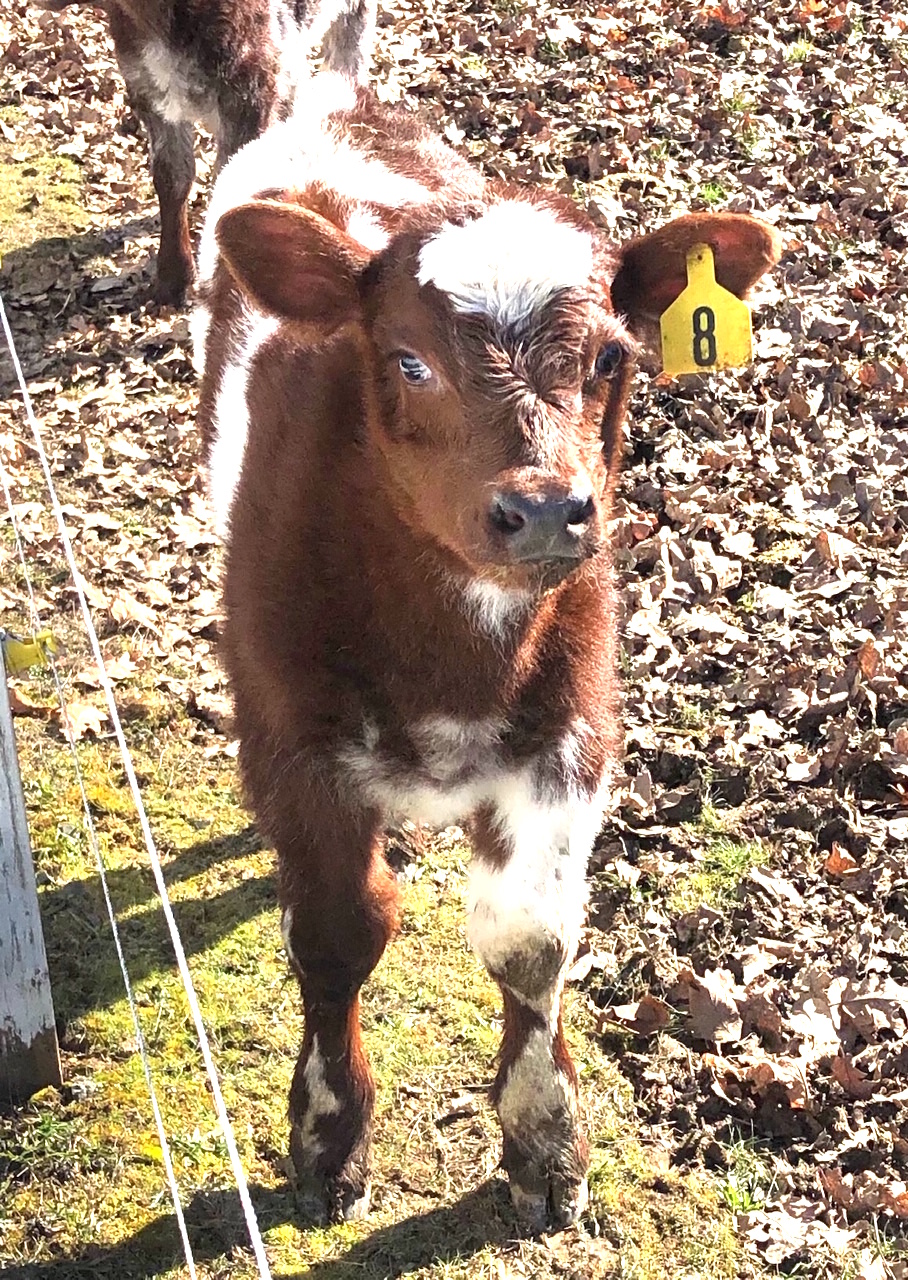
It seems to have happened to most breeders of Shorthorn cattle. You find a beautiful new calf and upon walking to it's head to apply an ear tag, there it is! A coal black nose or, perhaps, just smoky or mottled—in any case, it is not what you would have expected from the calf’s heritage. What a disappointment!

Black nose.JPG

In the past, this was cause for immediate cull of the animal because an off-color nose made the animal ineligible for registration. In many cases these animals could never be shown, and even as late as the 1970's judges still discriminated against such animals. This topic has been the subject of conjecture and recurring discussion for many years. Most people seem to believe that this nose color comes from an infusion of impure blood and hence the prohibition on registration or showing; however, this did not appear to be an issue to the earliest developers of the breed. To justify this statement, we can go back in time to the late 1700's, to a bull registered as Barker's (Richard) Bull (52). He was described as "red and white, born in 1784 at Darlington, bred by Mr. Richard Barker; got by Mr. Hill's Red Bull out of a cow sired by Lakeland's Bull". Barker's Bull (52) was the sire of many of the best early Shorthorns, and was commonly known as "Dicky Barker's Black Nose". This bull was the sire of Mr. Charles Colling's bull Foljambe (263).

Foljambe (263) was described as “white with a few red spots and a dark nose, handle good, wide back, dark face, a large strong bull, useful, big boned, and thick beast of great substance."

Charles Colling used him in his herd and he considered that Foljambe left him the best stock which he had. Foliambe was the double grandsire of Favorite (252).

Favorite (252) was described by Mr. George Coates (originator of Coates' Herd Book) as a "large beast with a fine, bold eye, body low down, low back, and other parts very good." Another early breeder described Favorite as a "grand beast, very large and open, had a fine brisket, with a good coat, and as good a handler as ever was felt". He was calculated to be 19.2% inbred since both his sire and dam were sired by Foljambe, with additional linebreeding from other early animals. He was born in 1793 and died in 1809. He was used indiscriminately for a period of 13 years upon his own descendants, commonly to the third generation, and even to the fifth and sixth generations in one or two prominent instances. All this inbreeding was accomplished with no apparent deterioration in constitution or quality of his offspring.

Favorite was the most influential bull which the Shorthorn breed has ever produced, being described as a bull who "sired a breed"!. In 1925, it was estimated that his relationship to the breed as a whole was about 55% (Mendellian Analysis of The Pure Breeds of Livestock: Sewel Wright). As a double descendent from "Dicky Barker's Black Nose", it is easy to understand how Favorite would have stamped that quality in the breed as a whole and how it might occur randomly today in heritage Shorthorns.

To finish, a quote from Lewis F. Allen (the first editor of the American Shorthorn Herd Book) is appropriate. In his book History of the Shorthorn Cattle (published in 1872), he states: "In the earliest history of them we find that cloudy, smoky, or even black noses in the Short-Horns were frequent, and some of the most distinguished breeders had more or less of them among their best animals . . . dark noses are inherent in the race, cropping out, now and then in almost every herd, even to the present day . . . Shorthorns with unimpeachable pedigrees, and descended in herds long distinguished for their superior quality, which had either dark or cloudy noses. Nor have we ever known that the color of the nose at all governed the otherwise essential good qualities of the animal. . ."

So, when you see that dark nose, rejoice because it harkens back to the best of the origins of the breed!


Author Profile: Dr. Martin Lee

Martin Lee was raised on a small registered Milking Shorthorn dairy, and graduated from Colorado State University with a DVM degree in 1973. He was in general veterinary practice after graduating, but since 1978 he has operated Idalee Veterinary Services, specializing in Dairy Consulting in Jerome, Idaho. He was the owner of Idalee Milking Shorthorns, which was the highest producing Milking Shorthorn herd in the world for many years between 1996 and 2006, until the herd was dispersed in 2006. One of his cows, Idalee Garnet Topsy-EXP, still holds the record for highest lifetime production for a Milking Shorthorn, with 318,330 lb. milk over 11 lactations. He currently has a herd of Beef Shorthorns with approx. 30 cows plus young stock and bulls, but in addition he still has 2 Native Milking Shorthorns.

Martin and his wife Susan Lee have each served multiple terms on the AMSS Board of Directors, and have each been National Presidents of AMSS. Susan Lee has also been very involved with dairy improvement and she has served terms as Director and as President of the National Dairy Herd Improvement Association. She currently manages the Idaho DHIA. Martin and Susan have a son and a daughter, plus 5 grandchildren.

2019

Heritage Shorthorn’s Impact on World Cattle Breeds

Throughout the British Isles and continental Europe localized “races” of cattle developed, each in their own way being bred to satisfy the demands of the populous. Development, distribution and sustainment of each of these “races” were all associated with the general improvement in agriculture. Military and naval actions, conquests, geography, government, laws and the general condition of the people all impacted them as well.

Shorthorns are the most widely documented breed in the history of cattle. The history, foundation and development of the breed has been recorded in print since the publishing of the Coates Herd book in 1822. Few if any breeds can pre-date this documentation. From these beginnings it is not surprising that they have reportedly contributed to the development and general improvement of more cattle breeds than any other. With this long and distinguished history it is thought that they have contributed their genetics to as many as forty other breeds of both beef and dairy cattle throughout the world, hence the saying: “Shorthorns, the Universal Improvers.”

Owing to their early development, promotion, and their inherent qualities of adaptability, versatility and maternal strength, they became at one time the most widely distributed and most numerous cattle breed in the world. For those seeking to gain the assets of more than one breed into what in today’s language is called a “composite” it is not surprising that breeders and researchers reached out to Shorthorns as part of their foundation stock.

Angus (previously Aberdeen-Angus) at present are the leading beef cattle breed in numbers throughout the US and since inception there has been the presence of the red gene in their cattle. The first Angus herd book was published in 1862 in Great Britain containing both red and black cattle. There was a period in the early 1800s when it was said that the Shorthorn breed actually “threatened” the Angus breed. Publicity and promotion of Shorthorns spread throughout Scotland and many breeders looked with favor on the use of Shorthorns to improve the native cattle. Subsequently good herds of Shorthorns were established in Scotland and the cattle were used in the improvement of native stock. The use of Shorthorns on the black native cows was a very common practice of the period for producing commercial stock. This practice of crossbreeding threatened the Aberdeen-Angus with extinction, and this may have been the origin of the red color. Some authorities, however, reject the notion that Shorthorn breeding was introduced into the Aberdeen-Angus breed in the early stages of its existence.

Santa Gertrudis cow

Santa Gertrudis cow

The Santa Gertrudis breed was founded in the early twentieth century with an effort to improve heat resistance, tick resistance and general performance of the range cattle in the Southwestern US. The King Ranch of Texas first used a half-blood Shorthorn X Brahman bull on a group of purebred Shorthorn females. Subsequent crosses were made with Shorthorn bulls, percentage Brahman bulls, percentage Brahman cows and Shorthorn cows. Selection for the “cherry red” color was also one of the criteria set forth in the establishment of this breed. The population then stabilized at five-eighths Shorthorn and three-eighths Brahman and achieved the objectives of the breeders of creating cattle that could thrive in this hostile environment. The adaptability of the Brahman influence and maternal influence of Shorthorns were keys in allowing these cattle to gain favor throughout many countries of the world. Santa Gertrudis have gone on to be parent stock in other “eared” (Bos indicus influenced) breeds such as the Barzona and the Santa Cruz.

Droughtmaster Bull

Droughtmaster Bull

The Droughtmaster developed in Australia also used the Shorthorn and Brahman breeds, plus some Devon influence, for their foundation stock.

Bonsmara Bull

Bonsmara Bull

In South Africa the Bonsmara breed relied on Shorthorns and Herefords as part of their parent stock in combination with the Afrikaner (Bos indicus), a South African breed, and they have become one of the most popular in that country.

Beefmaster Cow

Beefmaster Cow

Beefmasters are another Brahman influenced breed that drew from the Shorthorn influence as a portion of their foundation stock. After a series of crosses the population stabilized at levels of slightly less than fifty percent Brahman and slightly more than twenty-five percent of both Shorthorn and Hereford. In their establishment selection pressures were placed on pounds of beef produced under range conditions that were often adverse. There was no selection for color pattern or those characteristics that did not affect the carcass. There was a strict culling program based on disposition, fertility, weight, conformation, hardiness and milk production. The Shorthorn impact on these factors can be well recognized.

Murray Grey Cow & calf

Murray Grey Cow & calf

In Australia the Murray Grey breed stems from an original cross of a roan Shorthorn cow and an Angus bull with the resulting progeny being a gray calf. Subsequent matings from this cow with Angus bulls produced more of these uniquely colored gray calves. The breeders who maintained these gray cattle were convinced of their superiority and they have made a good record in carcass desirability.

Development of the Mandalong Special began in New South Wales, Australia in the mid-1960s. Five base breeds were used – Charolais, Chianina, Polled Shorthorn, British White and Brahman. After four generations the breed was stabilized with a content of 58.33 percent, European, 25 percent British and 16.67 percent Brahman bloodlines.

Maine-Anjou Bull

Maine-Anjou Bull

As early as 1839 improved Durham (Shorthorn) cattle were introduced into France from England and they became an integral part of the Maine-Anjou breed. These early Durhams when crossed with the Mancelle breed from the northwest agricultural area of France gave rise to the Durham-Mancelle dual purpose breed. Cows were milked for the family and bull calves were fed for market. Docile dispositions were necessary on the small farms where the majority of these cattle were raised. Approximately sixty percent of the foundation breeding is credited to the Durham (Shorthorn) breed and their name was changed to Maine-Anjou in 1909.

The presence of Shorthorn “blood” has impacted the world population of cattle with its use as a contributor to many cattle breeds as foundation stock in numerous countries across the globe. Just a few are mentioned above. The maternal strength and disposition of the breed has been an asset since the early days of their development and continue to be admired traits today. Incorporation of these traits has always been considered essential whether the rest of the foundation stock was used to improve environmental adaptability or beef making or milking ability.

“Shorthorns – the Universal Improvers.”

References:

Breeds of Cattle, Herman R. Purdy and R. John Dawes.

Modern Breeds of Livestock. 4th edition. Hilton M. Briggs and Dinus M. Briggs.

www.thecattlesite.com/breeds/beef/

afs.okstate/breeds/cattle


Author Profile: Dr. Bert Moore

Bert Moore proudly admits that he “grew up on Shorthorn milk.” Raised on a north central Iowa farm the only cattle that he knew were the red, white and roans. His first Milking Shorthorn came as a gift from his grandfather to his sister and him with the provision that they would receive every other calf and their father would receive the alternating year’s calf to pay for feed. With ten stanchions in the barn, when eleven cows were “fresh” it was Bert’s job to milk that eleventh by hand. This did not enamor him to the dairy business. Beef Shorthorns were added and comprised all his 4H projects. Shorthorns were the only breed both of his parents and both sets of grandparents raised making him a third generation Shorthorn breeder (on both sides of his pedigree).

After graduating from Iowa State University with a degree in Animal Science he went to North Dakota State University where he received MS and PhD degrees. As a faculty member there for over forty years he taught a wide variety of courses, advised students, conducted applied research and coached the livestock judging team. He has judged livestock shows at the local, state, national and international levels in 29 states and 4 Canadian provinces and has given presentations in Great Britain and New Zealand. After leaving North Dakota State he served as the Executive Secretary of the American Shorthorn Association. He and his wife Millie currently live in Indianola, IA where they maintain a herd of Shorthorn cattle, a portion of which are Heritage Shorthorns. Because of his deep interest in beef cattle history he is in the process of co-authoring a book on the history of Shorthorn cattle to commemorate the 150th anniversary of the founding of the Shorthorn Association.

2019

Thoughts on Cattle in a Commercial Setting

It seems to me, that the current direction of our Industry is to breed cattle for the feedlot, rather than to focus on what’s best for the producer. This is understandable, as that is the bread and butter of the cattle market. Unfortunately it has become all too common for Beef Cattle associations to promote the cattle genetics that may be marginally better in the feedlot, but which lack the maternal qualities that are of the most benefit to the folks raising the cattle up to the point that they leave the ranch.

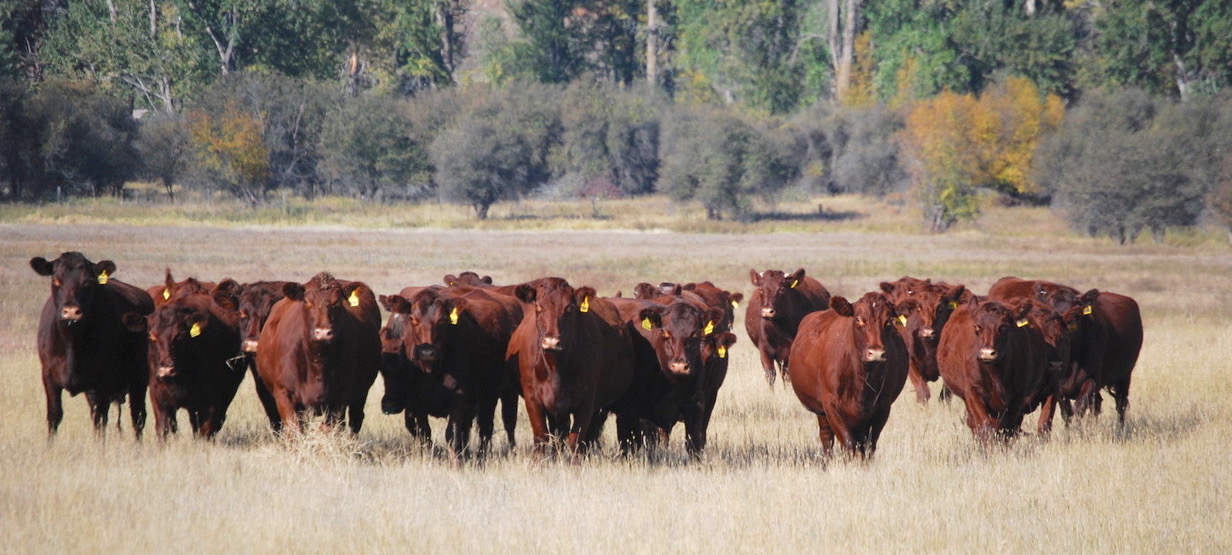
Group of cows.jpeg

It has been my observation over the years that any time you push Mother Nature too far, she will push back. Selecting for maximum feedlot growth often leads to increased dystocia. It only stands to reason that if a calf has outstanding growth after birth, it’s very likely that he also grew rapidly during late gestation. In order to alleviate this natural phenomenon, it has become increasingly common to use bulls with shortened gestation traits. This may alleviate some birthing issues, but this creates its own set of problems with under-developed and weak calves at birth. I can well tolerate some birth weight if the newborn has a long, slender shape conducive to sliding through the birth canal. I also believe that excessive “bone” development is responsible for causing a high percentage of calving difficulties. This is a problem that will not disappear as long as we have show ring judges selecting the heavily boned type for the ribbons. I may have overlooked something—if a reader has a good dinner recipe for Bone, please share it, as I may be missing out!

Shorthorn Cow Raising Twins

Shorthorn Cow Raising Twins

A consequence in Man’s quest for perfect carcass quality is that the structural soundness of our animals can be overlooked, especially in our cows. When I think of ideal “Maternal” qualities, I think of highly fertile cows with rumen capacity, medium size, and outstanding structural correctness to include udders, feet, legs, and a good, correct top line. In a commercial setting it is critical that our cattle have sound, correct feet & legs. We need to remember that a cow is a harvesting machine. She often has to travel long distances over sometimes less than ideal terrain harvesting the forage produced on lands unfit for other uses. Her leg structure must be conducive to bearing her weight as she does her job. We must also be critical of udder/teat structure as it is imperative that a newborn receive colostrum as soon after birth as possible. Not only does poor udder structure make this much more difficult for a newborn, it also lends to further udder damage occurring. Personally, there is nothing more frustrating than trying to stuff the end of a large teat into the small mouth of a calf who is actively resisting my attempts at saving him!

For sheer meat production efficiency, beef cannot compete with chicken or pork. A hen has the potential to produce a fertile egg every day. A sow is expected to have a minimum of 10 piglets in a litter and usually 2 litters/year. Due to this reproduction propensity, rapid change in genetics is much easier to achieve versus a beef animal where we wait 2 years to see what a heifer’s newborn is like, and won’t know for another 18 months (or so) before that animal is harvested or retained for breeding what the consequences of our breeding decision has produced.

A good cow should provide a minimum of 10-12 years of production in our herds. To the Cattle Feeder, this is irrelevant. He/she wants economic growth in that: “X” amount of feed will produce “X” amount of beef in the feedlot. To him, it matters little that the average age of a cow leaving production has been reduced to 6-7 years according to surveys and University studies. A developing replacement female does not return any money to the ranch until she is at least 2-1/2 years old and has successfully weaned a calf. She can’t really become profitable until she’s at least 4 and potentially nearing the end of her career in the “average” herd. As cattle producers, maybe we need to focus more on what’s good for us as producers when we develop our breeding decisions.

IMG_1287.JPG

It may be a wise move for the average cow/calf breeder or purchaser to plan a pre-sale tour of the prospective supplier of his next herd bull. Not to wade around in a pen of bulls while studying data sheets, but rather to study the cow herd that produced these bulls. Are they thriving in an environment similar to yours? Are the type of cows what you envision your herd to be? These are serious questions because they reflect what your cattle will become.

Raising good maternal genetics may not be as “romantic” as raising high performance types. Seldom (if ever) does the bull who sires females who are outstanding in their fertility, udder quality, structural soundness, and docile nature receive the accolades that the performance sire receives. Few breeders take into consideration the increase in dystocia, sub-par skeletal structure, lowered fertility, higher turnover rate, and added cost of maintenance that superior feedlot performance often creates. These problems become common when performance is the most important selection criteria.

YY Adam 294A

YY Adam 294A

In my “perfect world”, commercial cattle producers would be using a 2-way highly maternal British crossbreeding system. The three most common British breeds are the Angus, Hereford and Shorthorn. These three breeds have interchanged popularity standings over the years. All three breeds have lines left that are “Maternal”. All three breeds have cattle which have moved to the “Terminal” side. Selecting two highly maternal strains from these three breeds to cross will produce increased Heterosis (Hybrid Vigor) in the cow herd. When these good crossbred cows reach maturity, they would then be mated to one of the myriad of superior growth bulls which can be found in almost every breed of today.

Keep in mind that if you raise your own replacement females, you will have to resist the temptation to keep any of the terminal crosses for breeding replacements. If you do, you can expect the maternal qualities will slide downhill. It’s a “Nature” thing.


Author Profile: Ralph Larson (Y Lazy Y Shorthorns)

Mr. Larson was born in Choteau Montana in 1952. His parents raised sheep and cattle near Heart Butte, MT. Growing up, Ralph never missed an opportunity to urge his dad to get rid of the sheep and just run cows! When he was honorably discharged from the U.S. Army in 1975, he returned to the ranch and purchased a few Texas Longhorn heifers. The Longhorn cows provided insight into truly “low maintenance” cattle, which sparked interest in thinking about what truly “makes a cow a cow”. Where 4 season grazing was a necessity, Ralph found that these cattle and their ½ to ¼ female descendants excelled under true range conditions, yet their calves from Hereford or Angus bulls weren’t discounted at the sale ring. They were cattle who truly worked for the ranch, not the other way around.

The ranch had one Shorthorn cow in the 1960’s. She was roan, horned, and shaped like a barrel on legs. Her calves always outweighed their contemporaries by over 50 lbs. at weaning. That cow produced a calf every year past 21 years of age. One year she lost her calf in a severe spring blizzard. After moping around her dead baby a couple days, she then disappeared for 3 days. When she finally showed up, she had a little black baldy calf that she had evidently “adopted” at the neighboring place.

Ralph decided to raise purebred cattle with that prime example of maternal excellence in mind. He had a several year learning period in the purebred business before the idea finally took hold that the pursuit of Maternal Excellence was a better choice than Terminal Performance. A good set of “Maternally” selected cows can always be bred to the terminal type bulls that are so common today in every breed.

Ralph would like to publicly acknowledge the appreciation he has for men like Dr. Ron Bolze, Mr. Roy Lovaas, Mr. Larry Leonhardt, and others who helped shape his thought process that “it is the cows behind the bulls” and to achieve females that “work for the ranch”.


SB logo.png

For more articles about cattle breeding, cattle selection and other management topics, please visit The Shorthorn Bulletin.

2019

Laying the Foundation for a Production-Focused Purebred Herd

Having a production-focused purebred cow herd is a challenging yet rewarding segment of the seedstock business to which Heritage/Native Shorthorn cattle are well suited.

I believe there are two primary and often competing responsibilities for the production-focused purebred breeder. First, they must be a preservationist. All purebred breeders active today have built their programs on the bloodlines developed by breeders of generations past. It is their duty to preserve this legacy for the generations of cattlemen to come. Second and by no means less important, it is imperative that seedstock cattle are produced that can become a viable component for the commercial beef cattle industry or for specific niche markets.

Our own Shorthorn breed history has shown us that balance between these two competing goals is crucial to the success of the breeding herd and even to the breed itself. Two prime examples of the consequences of not maintaining this balance would be what happened in the Shorthorn breed with the strains developed by Thomas Bates and Amos Cruickshank in the 1800’s. Both herds, though developed some 50 years apart, were built on strong production criteria and provided seedstock that led Shorthorns to cattle industry dominance. Unfortunately in both cases speculation caused lineage purity to overshadow quality which in turn led to diminished functionality and the near extinction of these strains, and even the breed itself. A disciplined approach to balancing these ideals in your breeding program is a necessity for maintaining or increasing the viability of your herd.

Upon acknowledging the dual responsibilities of preservation and commercial relevance, the next step is to pick your target market. Due to fragmentation, niche markets, and to many different environments, there are quite a wide range of markets available. Do more than just select a market. Take some time to study your potential customer’s needs. For example, if your customer is located in a harsh environment with a low input type of operation, then a high milk production cow will not work for them. If however the herd is in an area of abundant feed then a heavier milking cow could be utilized to take advantage of these low cost inputs. It is all about helping your customer achieve optimum in their herd.

Try also to anticipate what their future seedstock needs might be based on their present breeding program and the signals that the market may be sending. A clear vision of your target market and the needs of this potential customer will be a valuable asset in the selection of the foundation stock for your herd as well as a vital factor in the success of your business.

(Commercial Beef) Shorthorn Bull “Kaper 4508”

(Commercial Beef) Shorthorn Bull “Kaper 4508”

(Commercial Beef) Shorthorn Bull “Wolf Ridge Frontline”

(Commercial Beef) Shorthorn Bull “Wolf Ridge Frontline”

Having identified your target market you are ready to begin the search for your foundation breeding stock. As you go through this process it is important to always keep in mind this one important fact: Change takes time in the cattle business! For this reason it is very important to select foundation cattle as near to your perceived ideal as possible.

Aside from the basic but important considerations of soundness, phenotype, production, health, and data, there are some important questions that should be answered as you search out a potential source for your foundation cattle:

  1. Does the breeder successfully supply breeding stock to cattlemen that mirror your target customer?

  2. Do they raise cattle in a similar way to what you plan to? For example low input vs high input.

  3. Is their breeding program long-term focused showing continuity and reliability? The pedigree can be of great assistance here. Does it show a succession of well planned matings designed to achieve the breeder’s goals? The other extreme would be a pedigree of haphazard matings which could indicate that the breeder has no clear goals, or that they have a “follow the fads” mentality.

  4. Are they located in an environment similar to where your operation is located, or if not, have animals from their herd performed well in your environment?

Finding cattle that check as many of the boxes as possible is of great value. Buying them for your foundation herd can put you years ahead towards achieving your goals as opposed to starting with the wrong type or background.

With the successful purchase of your foundation seedstock you can begin the ongoing challenging process of improving and fine tuning your herd. Always keep in mind the vision you established at the founding of your herd and continuously be cognizant of your customers’ needs.

Shorthorns with Wolf Ridge Double Brute

Shorthorns with Wolf Ridge Double Brute

I would like to end my thoughts on this process with an exclamation point of sorts. I have had an opportunity over the years to visit a variety of herds, many of which have been in existence for 50 years or more. A reoccurring theme in most all of these visits was the breeder pointing out an outstanding individual or group of animals purchased at the beginning of their career that became the basis for their success. It is my hope that you will someday be able to say the same.


Author Profile: Gary Kaper

Gary is a Registered Shorthorn breeder located in Watseka Illinois. He started his herd in 1973 and today the entire herd traces many times to the original cows purchased at the herd’s beginning. Over the years semen and breeding stock from this herd have been sold into 21 states, Canada, and Australia. Data collection has always been a priority and over the years several performance awards recognizing maternal efficiency have been received by individuals in his herd.


For more articles about cattle breeding, cattle selection and other management topics, please visit The Shorthorn Bulletin.

2019

The Importance of Heritage Shorthorns Today

A true craftsman or artist in any field doesn’t set out with recognition as his goal. Rather, it is the project or mission that bears top priority. The end result must be the best that one can accomplish. “Good enough” is not part of the formula. Such was the attitude of those who, over centuries, skillfully blended the native cattle which, as Alvin Sanders terms, “[crystallized] in and about the Teeswater Valley.” Heritage Shorthorns can lay claim to being under the stewardship of more true craftsmen than any other breed. Though the cattle did have their faults, their positive traits were found desirable enough that various later stewards, employing the stock breeding system of Robert Bakewell, successfully improved the breed to the point that eventually a herd book of the breed was begun by George Coates in 1822, to keep track of such regal cattle. Under further management of additional skillful stewards, Shorthorns earned such well-deserved nicknames as, “The Universal Improver”, “The Farmer’s Cow”, and “The Mother Breed”.

Teeswater Valley, England

In his October account of the August 1859 Edinburgh show of the Highland and Agricultural Society of Scotland, Peter McLagan, Jun., Esq., had this to say, “The improved Shorthorns are possessed of a hardy constitution, and excel all other breeds in their early maturity, and in carrying on their growth with their condition – a most valuable quality…The value of pure shorthorns to Scotch farmers generally, is for crossing with their native breeds; and here purity of blood and fineness of points is as necessary, because as profitable, as if pure herds were to be kept…We need not remark how valuable the shorthorn is to the Scotch farmer for crossing with his native breeds to produce grazing animals. It improves for fattening every breed it crosses with. This is universally admitted.” It should be no wonder to us that Shorthorn blood has contributed to the development of over 40 other breeds of cattle.

The improved Shorthorns are possessed of a hardy constitution, and excel all other breeds in their early maturity, and in carrying on their growth with their condition – a most valuable quality…The value of pure shorthorns to Scotch farmers generally, is for crossing with their native breeds; and here purity of blood and fineness of points is as necessary, because as profitable, as if pure herds were to be kept…We need not remark how valuable the shorthorn is to the Scotch farmer for crossing with his native breeds to produce grazing animals. It improves for fattening every breed it crosses with. This is universally admitted.

When asked to write an article about the importance of Heritage Shorthorns, I wondered how I could properly express the subject in a concise enough fashion to fit the word limitation. It is one thing to have loyalty to a favorite breed because that is the kind of cattle one likes to have around, and another to peel the onion skin away on what it is that compels one to keep that breed. One has to be honest with himself as to why one even raises cattle. For some it is merely to keep the brush down, for some the utilization of land unfit for tillage, for others merely a commodity, for others bragging rights in the coffee shop, and for some tradition and self-validation. Heritage Shorthorns are versatile enough to fit into each of those categories, however I feel we would do well to think of a much larger importance which they have; although, for numerous reasons and agendas, they have been denigrated to one of the best kept secrets the industry has ever known. Since the emphasis on the beef side of the industry is the most glaring to me, I will share a fitting example.

A number of years ago a very good friend of mine, Dr. Ron Bolze (who had been instrumental in the development and success of the Certified Angus Beef program), forwarded me a copy of a “white paper”. The paper was trying to explain why the Certified Angus Beef program (CAB) had to “change CAB carcass specifications to include Yield Grade 4 carcasses to generate an adequate supply of CAB product”. In short, the Angus cattle could not sufficiently marble unless fed longer resulting in excess fat cover.” I found it interesting that it wasn’t until ten or twelve pages into the paper that genetics was mentioned as a possible factor.

If we are ultimately in the food business, of which our cattle are a foundational element, then, we would do well to examine our own breed’s history. George Santayana said, “Those who cannot remember the past are condemned to repeat it.” I perceive that to be the case with the “Shorthorn” breed today. Because of various motivations, most producers of “Shorthorn” cattle today have purposely or unknowingly infused so much other blood into them that, I dare to say, a good many are just mixed breed cattle. Other prominent breeds are experiencing the same issues. In chasing the elusive butterfly, the past was either unknown, ignored, or forgotten. In general, Heritage Shorthorn genetics available today offer consistent quality with acceptable performance, lower input feed efficiency, lower input management, and most often, high fertility.

The beef industry overall is ripe for a repeat of that which Robert Bruce describes of the use of Shorthorns with Aberdeen Angus in the 1830-1860’s in Scotland:

The blend of the two breeds is a mixture which produces a class of cattle having no equal as a rent-paying stock in this country; and speaking from my own observation I believe it matters little how the mixture is concocted so long as it is Shorthorn and Aberdeen-Angus, the judgment of the breeder being brought into play in determining the amount of either of the two factors.

Over a century later I experienced first-hand the very same in my commercial herd. Heritage Shorthorn bulls on commercial Angus herds could improve the quality of Certified Angus Beef in just one generation, and the heterosis would be like free pounds and money.

Quality: From personal experience with numerous feedlot trials over the years, the higher Heritage Shorthorn blood concentration in my commercial Shorthorns produced steers which were often the top farm group percentage in meeting USDA Choice or better quality carcasses. In tenderness tests they were also quite often in the “fork tender” category. Tenderness is one of the most important factors consumers have expressed for a quality eating experience. Heritage Shorthorns have well proven, even today, their ability to naturally transmit marbling and tenderness, quality traits which were bred and stamped into them since before the 1800’s.

This cut of meat is from a bred Heritage Shorthorn heifer that went to emergency slaughter due to a severe injury. Notice the marbling quality from this heifer which had not been on a “finishing ration”—she had never had grain.

This cut of meat is from a bred Heritage Shorthorn heifer that went to emergency slaughter due to a severe injury. Notice the marbling quality from this heifer which had not been on a “finishing ration”—she had never had grain.

Heritage/Native son out of Oakwood Conductor who was the sire of the injured heifer. The heifer was also a grandaughter of Weston Surprise 14th, on the maternal side.

Heritage/Native son out of Oakwood Conductor who was the sire of the injured heifer. The heifer was also a grandaughter of Weston Surprise 14th, on the maternal side.

Lower Input: Profit is a significant driver. The easiest way to increase profit is to decrease input. One of the easiest ways to decrease economic input without reducing quality is with Heritage Shorthorns. Consistently, in my experience, Heritage Shorthorns, and high percentage bloodlines are able to better function in harsher environments and on poorer forages than most other genetics. They really do rather well in a grass-fed/grass finished system, even in a somewhat “keen” environment, as Professor Bonsma (an internationally known livestock ecologist) might call it.

However, low input is most desirable in everyday management, as well. When one doesn’t have to lose sleep during calving because of the inherent ability of cows and heifers to successfully calve on their own, stress is vastly reduced. When the newborn calf is vigorous and both mother and baby instinctively get the job done without help (even first-time mothers), effort and stress is vastly reduced. When a mother does a decent job of raising her calf, maintains adequate condition, and breeds back in timely fashion, management is relaxed and stress is vastly reduced. In other words, life is OK. In all these things, Heritage Shorthorns perform above average, and they are most quick to recognize and cooperate with their human stewards. All they ask is basic care and a chance to do what they were created and developed to do; work for their master. Heritage Shorthorns truly deserve the nickname “Mother Breed”.

Anyone privileged to have really experienced the practical functionality of Heritage Shorthorns knows full well the superior disposition, calving ease, vigor and growth, production of milk, high quality meat, and ease of management. All these areas are of vital importance to the individual steward involved in the day-to-day management. Too often external factors and extenuating circumstances generate frustrations, and one must not let the blame for this frustration be placed upon the cattle. I speak from numerous experiences caused by people in several arenas, but at the end of the day, those wonderful cattle were still there. They didn’t know the politics, personal agendas, and manipulation, they simply wanted to live and do their job. The depth of quality in Heritage Shorthorns make it much easier to walk away from the established circles and create a niche market. How does one quantify the importance of such freedom?

It is almost 200 years since the Coates Herd Book was established to record the heritage of such an amazingly valuable breed of cattle, and yet, here in 2019, we find less than 3500 Heritage (or Native) Shorthorns left in the entire world. The main system of beef production has overstepped the bounds of practicality in many ways and could certainly benefit from what Heritage Shorthorns can bring to the scene. With the significant increase of health consciousness among consumers, the value of grass-fed/grass-finished beef is as high as I can ever remember, and Heritage Shorthorns really shine in that arena. The responsibility to skillfully carry the Heritage Shorthorn baton presented centuries ago is not a novelty or fad. These rare and limited genetics, which are clearly unique clusters in the DNA map of the bovine species, possess the ability and versatility to renew many qualities virtually ignored by the industry. Though we may be few in number and scoffed at by some as “romantic” breeders, each of us who are stewards of these unique genetics have a serious responsibility to their faithful preservation, not only in purity of the genetics, but the accuracy of their pedigrees as well; to their propagation, not only to preserve the gene-pool, but with the skill and discipline of the many illustrious craftsmen of the past; and to their promotion, not merely as a quick fix for the wreck others have created or the novelty of having something rare and different, but that future generations may not be deprived of this amazing resource for the good of all who utilize beef.


Author Profile: Roy Lovaas

As a result of an accidental mating between an old Hereford / Holstein cow who managed to swim a waterhole to meet up with the neighbor’s “native” Shorthorn bull, Roy Lovaas and family have been raising Shorthorns since 1986. Their Hidden Hill Farm (HHF) Shorthorn herd was involved in 4H, State, and National Shorthorn shows until 2003. They were the first breeders to capture both the Grand and Reserve Champion Shorthorn carcass rating at the North American International Livestock Exposition at Louisville, Kentucky in the same year, and they have participated in numerous carcass feedlot trials. Roy has served on the boards of many cattle organizations including a term as a Director of the American Shorthorn Association. His interest in Heritage “Native” Shorthorns was piqued as result of dissatisfaction with the available gene-pool of Modern Shorthorns and a chance visit to Haumont Shorthorns in Nebraska. There he discovered how rare Heritage Shorthorns were and set about to gather as much information on them as he could. He then accumulated semen on a large number of old Heritage bulls, and did embryo transplant work. Roy contributed over 100 “Heritage” DNA samples for a cattle gene mapping study being done by Dr. Jerry Taylor at the University of Missouri. Roy continues to raise Shorthorns for both the purebred and commercial markets. Roy and his wife of 42 years have lived in East Central,Minnesota since 1986. They raised 3 daughters, plus nieces & nephews, and now have 11 grandchildren.


SB-white.png

For more articles about cattle breeding, cattle selection and other management topics, please visit The Shorthorn Bulletin.