By: Joseph Schallberger, DVM PhD & Susan Schallberger DVM
Overview:
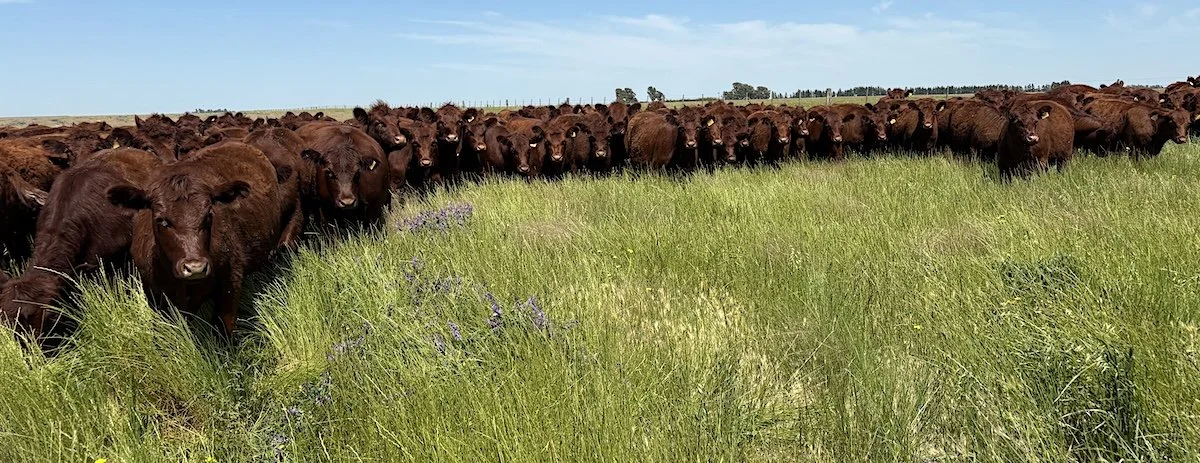
It had been almost 30 years since we previously visited Argentina. At that time we were only in the Suffolk sheep business so cattle ranches had not been on our list of places to visit. Many changes to Argentina were expected and we were not disappointed when we took a trip to Argentina this November (2025). Since almost all of this new trip was in rural Argentina, Sue’s ability to speak Spanish was extremely helpful in navigating the many cultural differences and gleaning additional insight into the thinking of the average Shorthorn breeder in Argentina. During our trip we transversed almost 2000 miles in our rental car. When we initially traveled SW from Buenos Aries we noticed a lot of water in fields. As suspected they were having a very wet Spring (November in the Southern Hemisphere) which at times made the driving “interesting” particularly since a number of the rural roads were dirt roads. After several recent dry years, the wet Spring also accounted for the very lush pastures we saw everywhere.
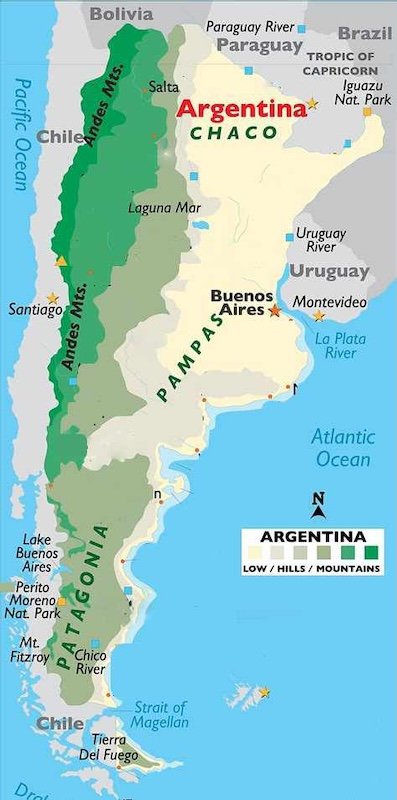
For those not familiar with the cattle raising area of Argentina it primarily consists of the Pampas which runs through central Argentina from the Atlantic coast to the Andean foothills. Annual moisture decreases moving West and is quite dry close to the Andes. To the South is Patagonia. The fertile grasslands are the perfect environment for raising grass-fed beef. There is some utilization of field oats in overseeding pastures. The predominant form of cropping in Argentina is no till. Similar to other countries, Black and Red Angus are the predominant cattle. As in Brazil more of the land is now being used for row cropping which undoubtedly will reduce the cattle raising area and result in additional beef being raised in feedlots.
Dr. Juan Martín Narbaitz arranged our itinerary and put us in contact with the different Shorthorn breeders we met. His help and friendship, along with his wife Monica, was instrumental to the success of our trip. We found all Shorthorn breeders we met in Argentina to be knowledgable, welcoming, helpful, innovative, and with exceptional dedication to the Shorthorn breed. Some families have bred Shorthorns for over 100 years.
Argentina’s great expansiveness results in a multitude of different cattle growing regions and management techniques. When it comes to Shorthorn breeders there are several overriding principles that apply to most Shorthorn operations in Argentina. They are all grass-fed with minimal supplementation. The preferred color of most Shorthorns is red. Average cow and bull size is much smaller than in the USA. Most breeders prefer a cow size of 450-500kg (1000-1100#) and bull size 800-900kg (1750-2000#). Small birthweight and calving ease are mainstays of their production model because all calving is done outside in a natural setting. Most calves are born in the Spring (September-November) with little fall calving. There is limited use of artificial insemination although it is increasing with subsequent interest in introducing foreign Shorthorn genetics which can complement/improve the Shorthorns in Argentina. Argentine Shorthorn breeders are not interested in Dual Purpose or Milking Shorthorns. Breeders want beef Shorthorns that historically compare to some of the old Scottish Shorthorn bloodlines in both size and type. EPDs and EBVs are not regarded as important in their selection process. One breeder indicated EPDs were about 15th in his list of criteria for selecting breeding stock. Much emphasis is placed on phenotype when selecting replacements. Longevity is higher in most Argentine Shorthorns, in comparison to Modern Shorthorns in the USA, which is due to hardiness being another of the prime selection traits. Besides color, two other phenotypic traits that were consistent in Argentine Shorthorns were level top lines and great depth of body. Because of the Argentine focus on the production of hardy, functional beef cattle, the current type of Modern Show Shorthorns in the USA with their high tail set, low slung backs, and diminished livability are totally opposite to what the average Argentine breeder wants in their Shorthorns. Medium frame beef Heritage Shorthorns from the USA and Canada could effectively be used in Argentine Shorthorn herds to complement them both in phenotype and to add genetic diversity.
Two negative traits seen in some Argentine Shorthorns, that were communicated to us by several different Argentine Shorthorn breeders, included udder/teat issues and not shedding their hair coats in the Spring. Some attributed the inclusion of Lincoln Reds in the herd books at one point to be the causative factor for the shedding problem.
It is important to note: There are a large number of Shorthorn breeders throughout Argentina, and we only had time to visit a small number of ranches. In order to limit the length of this article we elected to only hit the high points from each herd that we visited and to include only a few photos. (There is a picture folder associated with this article that has many more photos.) We have more information available on Argentine Shorthorns and breeders than what is included in this article. If anyone is interested in more insight and contact information on any breeder that we visited, please contact the HSS office (office@heritageshorthorn.org).
Also note: We have tried to be as accurate as possible in writing this article. There may be inaccuracies because of the many photos we took, the extensive information we had to assimilate, and difficulties with language translation, so we want to apologize ahead of time to the Argentine Shorthorn breeders we visited if we have made any mistakes. Please contact us if a critical correction is needed.
The Shorthorn breeders are listed in the order they were visited.
1. Jorge, Charlie, and Philip Dawney (brothers)
Ranch: Cabaña El Chajá 9 de Julio, Argentina
The Dawney family has been raising Shorthorns for over 100 years. Jorge runs the purebred cattle herds (Shorthorns, Criollo, and Angus), their feedlot, and some cropping land (which is close to 9 de Julio). The purebred herds are primarily used for the production of bulls to use on their own commercial herds as they utilize a unique crossbreeding program to maintain their beef quality, increase hybrid vigor, and the positive phenotypic traits they have in their herds. Charlie is in charge of accounting, record keeping, and dealing with the many government regulations that exist in Argentina. Phillip runs the western ranch which is 27000 hectares and is mostly commercial cattle. In total they have over 2000 cows and primarily sell market steers. Their crops include soybeans, wheat, and corn. They also raise polo ponies as a sideline. Horses have a long and important history throughout rural Argentina, and Polo is an extremely popular sport in Argentina. Many stables engage in raising and selling polo ponies.
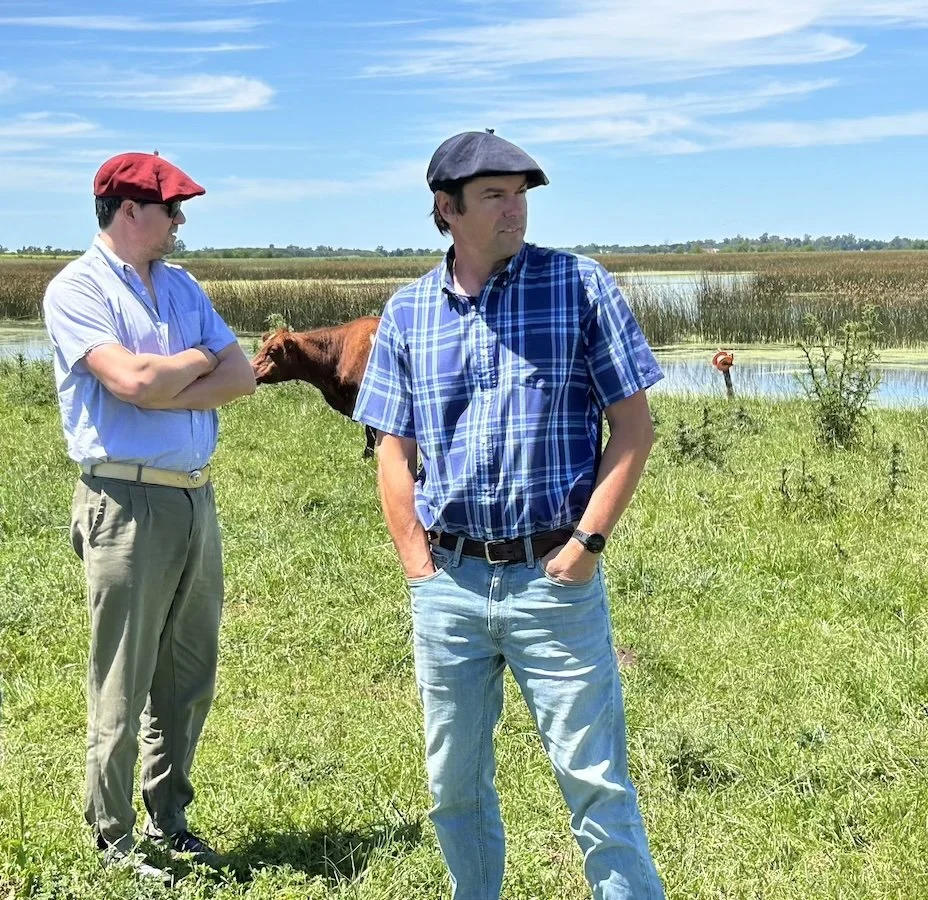
Charlie (L.) and Jorge (Rt.) Dawney
The Dawney brothers utilize extensive record keeping to measure “in house” production in their herds. There is an emphasis on rate of gain, fertility, weaning weights, and longevity. They prefer a slightly larger cow at 550kg (1200#) leading to higher weaning weights, compared to many other Argentine Shorthorn breeders. Cows must settle in a 65 day window or they are culled. They have a 3000 head capacity feedlot that they use to finish higher value steers. This aspect of their operation has expanded and they are looking to create more value in the export market if the Argentine government opens up to allow export of beef.
Overall the Dawneys are to be complimented because of their adherence to selection standards which are based on their market, the type of genetic traits they have inserted into their commercial herd, and their commitment to the Shorthorn breed. They realize how important it is to raise cattle that fit their management system but also have traits, such as significant marbling, to fill an evolving niche in the Argentine beef industry.
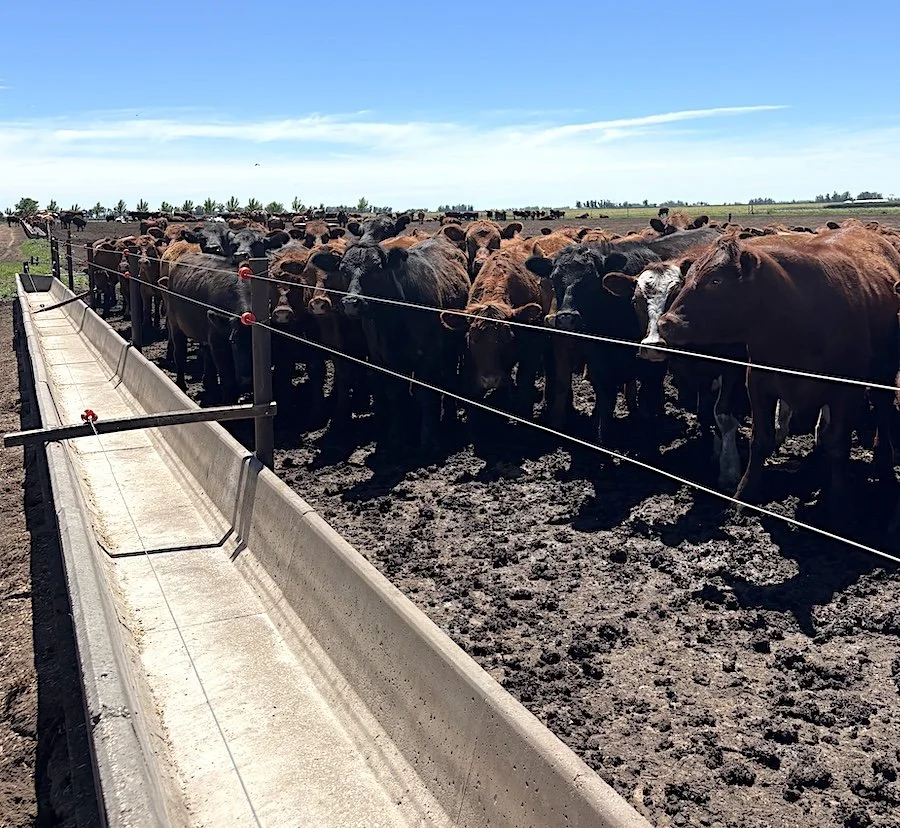
Dawney Feedlot for commercial steers
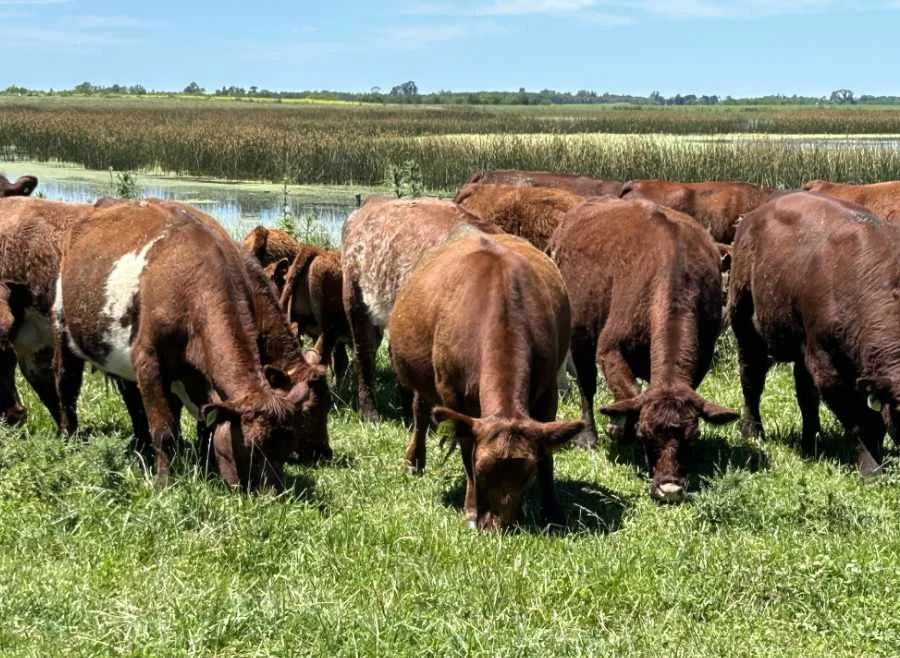
Shorthorn cows
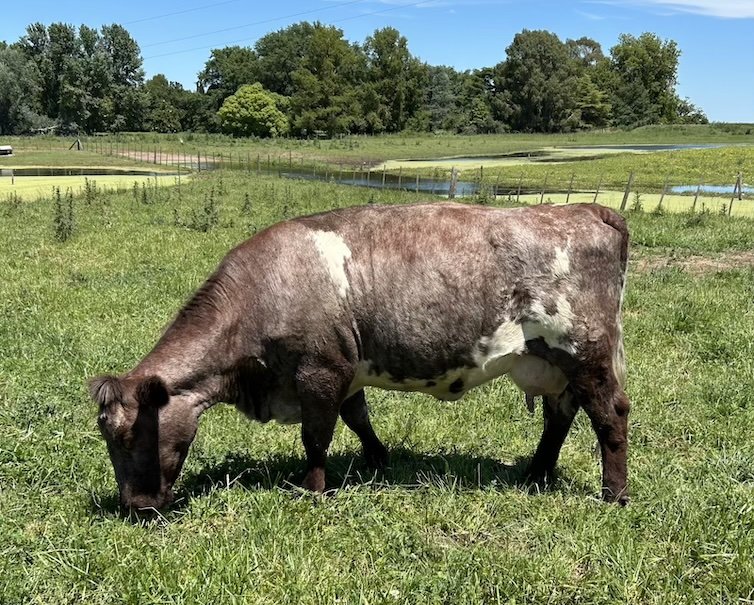
Mature Shorthorn cow
For those unfamiliar with Criollo cattle they are an extremely interesting breed with many positive characteristics. Originally they were brought to Argentina by the conquistadors in the 15th and 16th centuries. Their ancestors were Iberian cattle. For a long time they essentially ran wild especially in Western Argentina. Their hardiness, feed efficiency, longevity (20 years or more), and calving ease are their primary positive traits. They are part of the Dawney’s breeding program for those reasons. They help them produce a better commercial cow. We were quite impressed with their Criollo herd. One surprising characteristic of the Criollo breed, despite the fact that they ran feral for so long, is how calm and gentle they are.
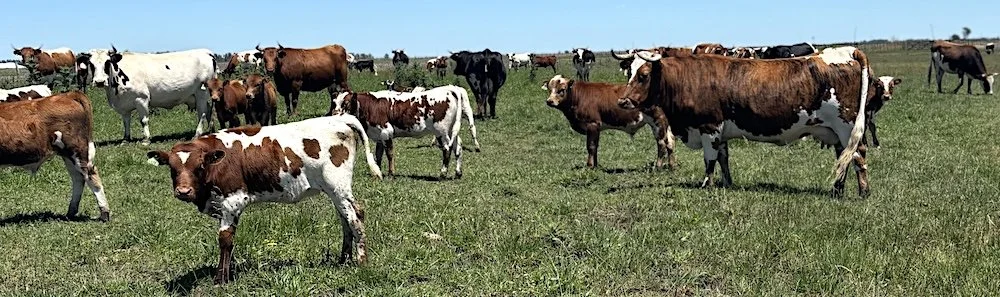
Criollo Cattle, Cabaña El Chaja
2. Dr Juan Martín Narbaitz, Veterinarian
Ranch: Cabaña Urepel Carhue, Argentina
Reproductive center: CABA (Argentine Center for Animal Biotechnology)
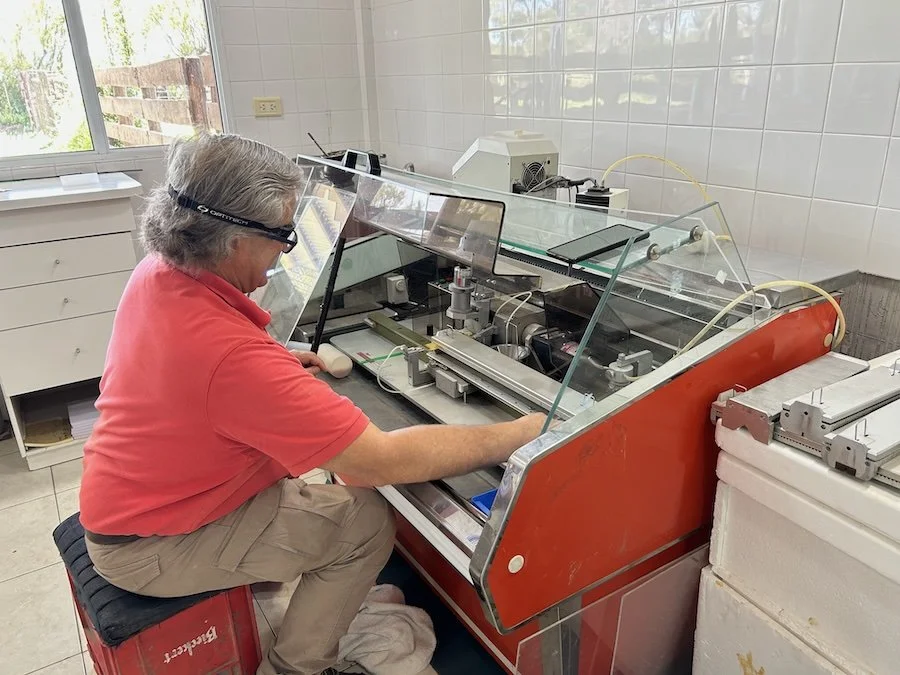
Dr. Martín Narbaitz processing semen at his CABA facility
Dr. Narbaitz has a special place in his heart for Shorthorns which was obvious to us even before we arrived in Argentina. Despite his involvement with many other cattle breeds through his cattle reproduction center, Shorthorns are a priority with him. Eventually his son, who is also a Veterinarian, will be joining him at CABA as they move into IVF embryo production.
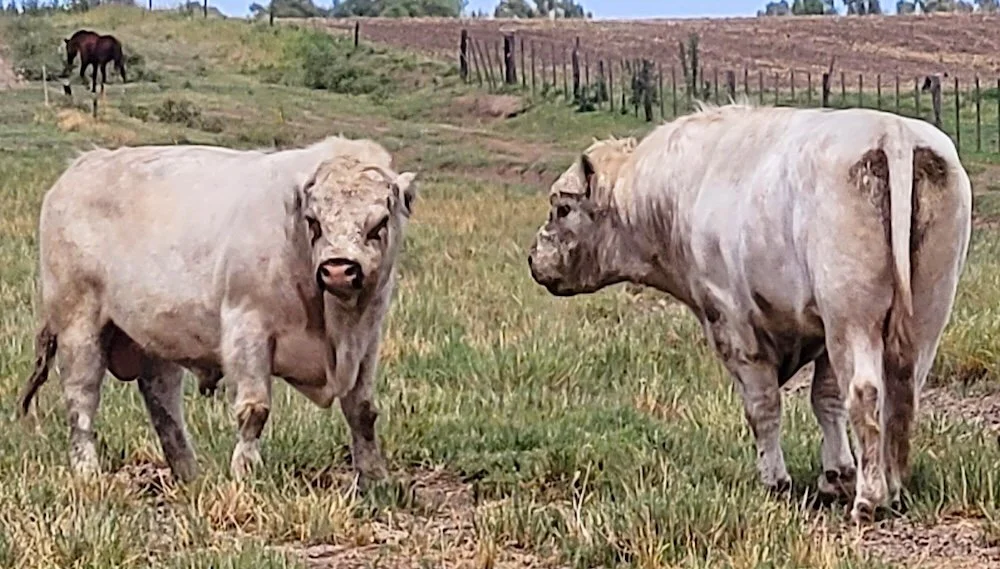
Full brothers out of Kinnaber Leader 9th
At the time we were at CABA there were 90 different bulls being collected. He travels extensively throughout Argentina working with many different cattle breeders to improve their herds. His wife, Monica, handles most of the paperwork for CABA, of which there is a large amount due to the government system in Argentina. Monica is fluent in English and she was very generous with her time in showing us various highlights of the Carhue area. Dr. Narbaitz is quite familiar with Heritage Shorthorns and has such Heritage Shorthorn bulls as Kinnaber Leader 9th, Mandalong Super Flag, Stonmour Thunder Cloud, and Lone Pine Grand Society in his Heritage Shorthorn semen inventory. He maintains that older Heritage Shorthorn genetics are far superior to Modern Shorthorns for many reasons. More importantly he sees Heritage Shorthorns as an important avenue to enhance the diversity in the Shorthorn population in Argentina and to fortify the positive traits that exist in Argentine Shorthorns. Heritage Shorthorns dovetail with the grass fed cattle management systems in Argentina that are the basis of their cattle industry.
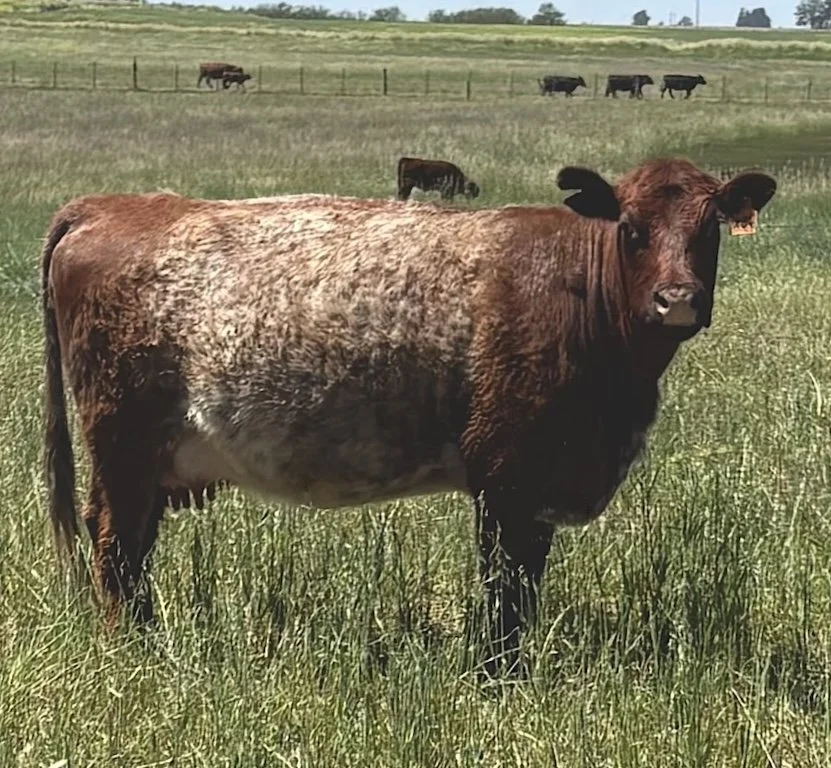
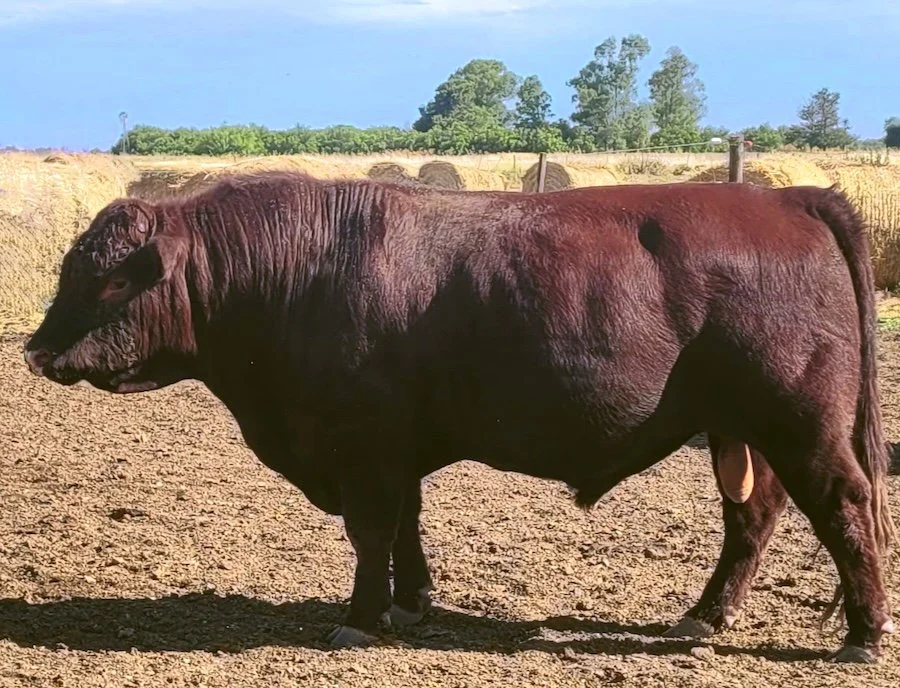
Son of Top Hill Ensign Viscount 23 (Argentine bull born 1970)
Presently Dr. Narbaitz has a small Shorthorn herd (90 head) since his other time commitments limit how much time he can spend on his Shorthorn herd; however he is slowly building it up with older Heritage Shorthorn genetics. He uses timed AI to breed most of his cows which gives him various options to upgrade and strengthen his Shorthorn herd. Most of his calves are sold at weaning. He sells 40-50 Shorthorn and Angus bulls each year. He has used Kinnaber Leader 9th extensively in his breeding program with excellent results. Presently he is producing embryos sired by several Heritage Shorthorn bulls all of which were previously mentioned.
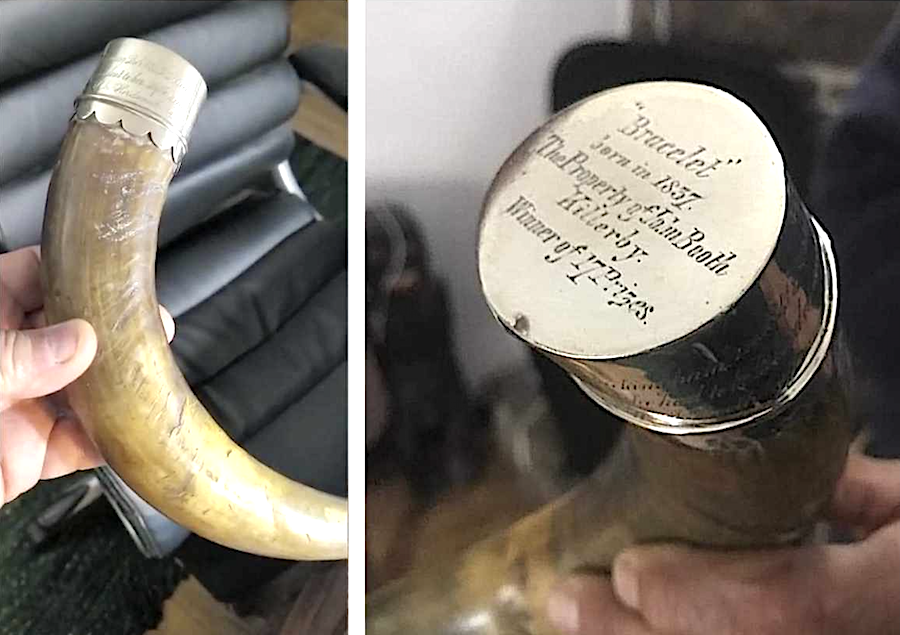
Undoubtably the biggest historical surprise of our trip to Argentina occurred at CABA when Dr. Narbaitz came out of his office with an original horn from the famous Bracelet cow born in 1837. Bracelet and her twin sister Necklace are two of the most famous and influential cows in Shorthorn history. Their story is on the HSS website in the Historical Shorthorns section (Prior to 1890). Bracelet was actually euthanized in 1845 because of a severe knee infection. How the horn ended up in Dr. Narbaitz’s possession is interesting in itself. Reginald Booth, a decendent of John Booth the breeder of Bracelet and Necklace, came to work for the Lahusen family in Argentina in the early 1900’s bringing the horn with him. Through other family connections the horn ended up with Mailhos family in Brazil. Early on they raised Shorthorns, but in the 1990’s they left Shorthorns and currently raise Angus and Herefords. Dr. Narbaitz was invited to give a talk at the Mailhos ranch in Brazil two years ago. The family, knowing of Dr. Narbaitz’s intense interest in Shorthorns, presented him with the horn.
3. Julio Gonzales
Ranch: Cabaña El Cencerro Carhue, Argentina
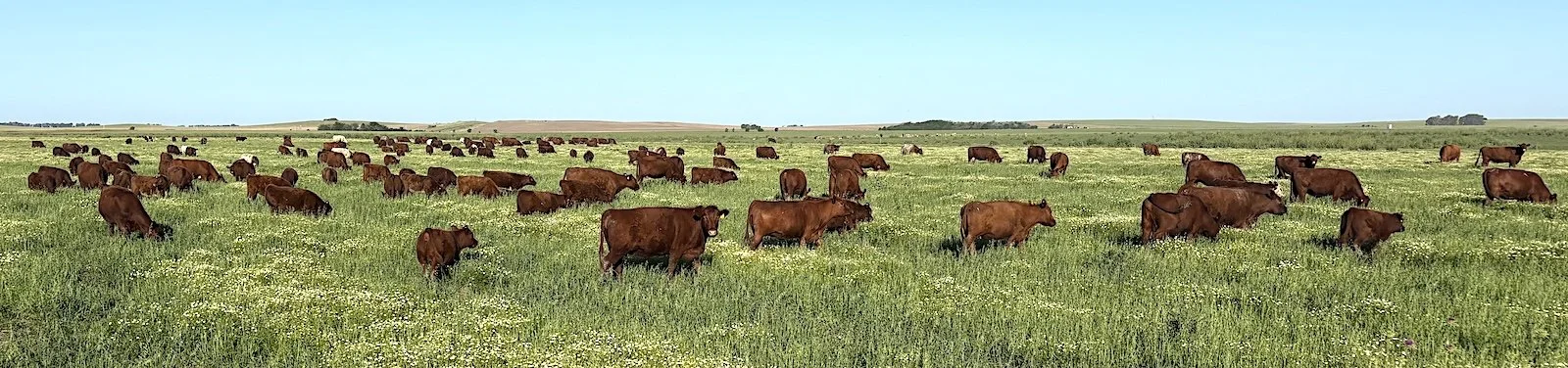
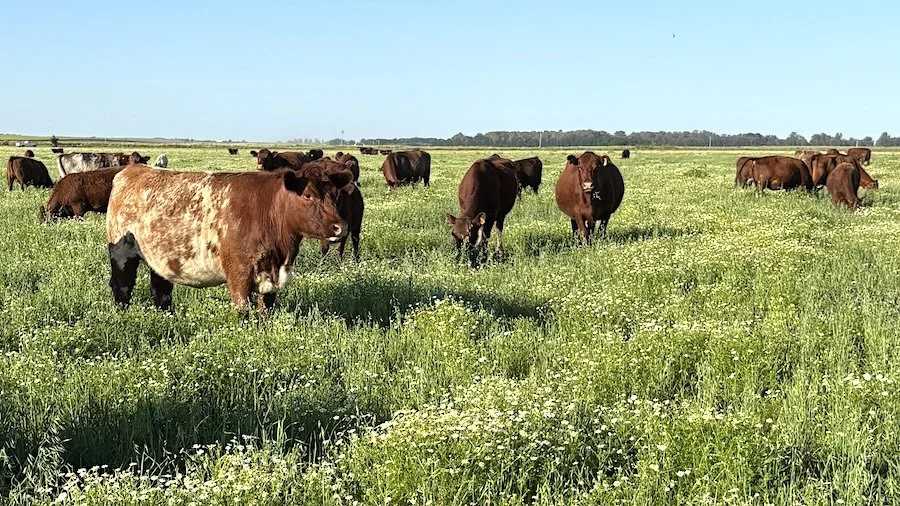
Julio Gonzales has raised Shorthorns for almost 50 years with an emphasis on the commercial side. He prefers a compact, smaller framed animal because of his commercial market. His cows are mostly red and are very similar with level tops, significant depth, and good thickness in their rear quarters. The group of 300 cows we saw, with calves at side, were an excellent group. The thickness in the calves, along with wonderful style, was striking. Also the consistency in his herd is a tribute to Mr. Gonzales’ selection methodology. He does not sell Shorthorn breeding stock. Several of his bulls harken back to the old time Shorthorns in the USA, but instead of being fat, they have muscle which makes a huge difference in carcass yield. The area where Mr. Gonzales pastures his herd has a very sandy soil much like the sandhills of Nebraska. The wear from the sand on his cattle’s teeth does not allow many of his productive cows to get past 10 years of age before it is necessary to cull them.
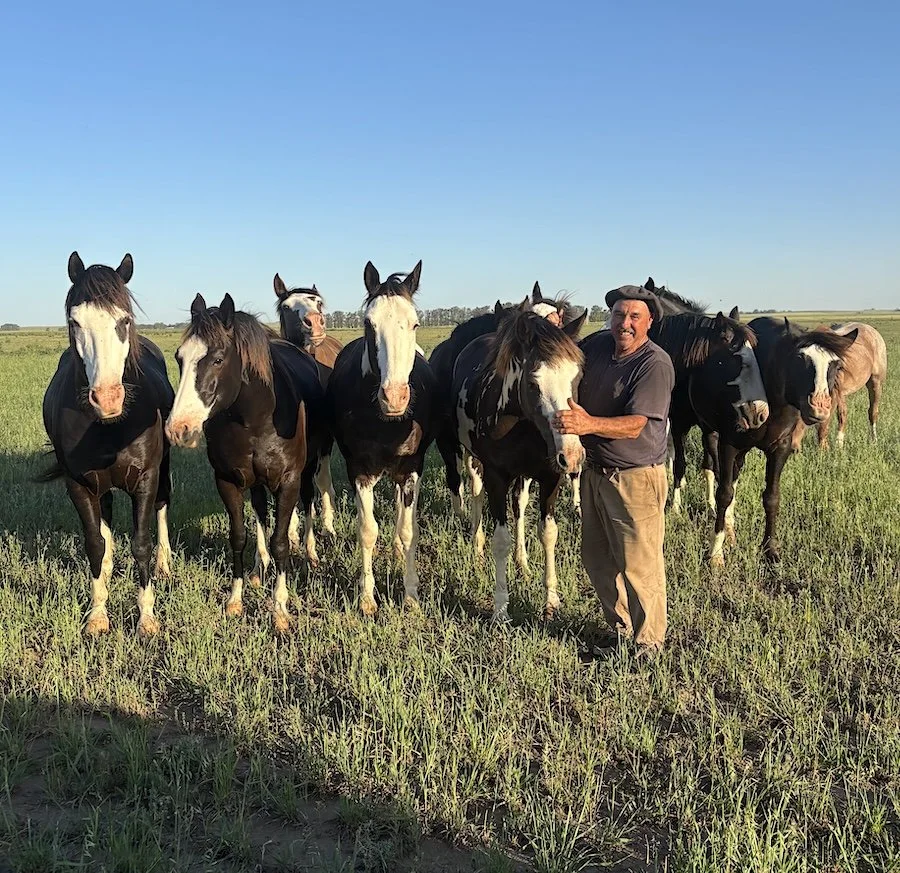
Julio with some of his Criollo horses
He also raises Criollo horses (40) that many say are the finest in Argentina. It is the native horse of the Pampas and has been the main horse used by gauchos in Argentina. The breed dates back to an importation in 1535 of purebred Andalusian horses into Buenos Aries. Eventually they were released into the wild and the horses became feral. In the 1800’s people began capturing them to use on their ranches. They became known for their long distance stamina because of their low basal metabolism—an ideal mount for the gaucho working with cattle. Criollo horse breeders in Argentina have very strict standards they use in maintaining and promoting the Criollo breed. When you see them in person they are amazing looking horses.
4. Dr. Hector Montero & family
Ranches: Cabaña El Campito (main cow herd) Bordenava, Argentina
Cabaña Los Olmos (bulls & finishing steers
Cabaña Don Alejandro (cows)
Cabaña El Canador (cows and heifers)
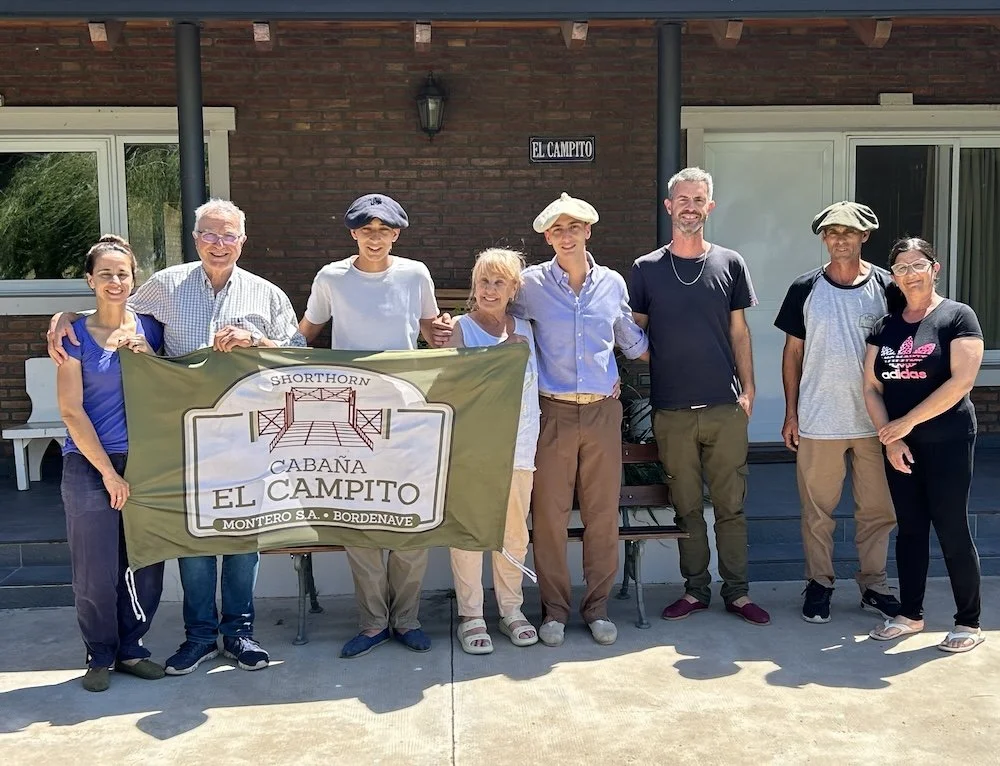
Dr. Hector Montero (on left) and family
Dr. Montero is an Obstetrician by trade. His family has been raising Shorthorns for over 100 years. Several sons are involved with the cattle operation, and a daughter is a Veterinarian. When we visited their “El Campito” Ranch, the Montero extended family treated us to a delicious traditional asado (BBQ) meal of roasted beef, sausages, salads, and additional side dishes.
Dr. Montero owns about 2300HA with the land divided into 4 different ranches that are overseen by different managers at each Cabaña. He has over 1000 Shorthorn cows and has a progressive overseer that helps to coordinate everything and keeps excellent computerized records on the herd.
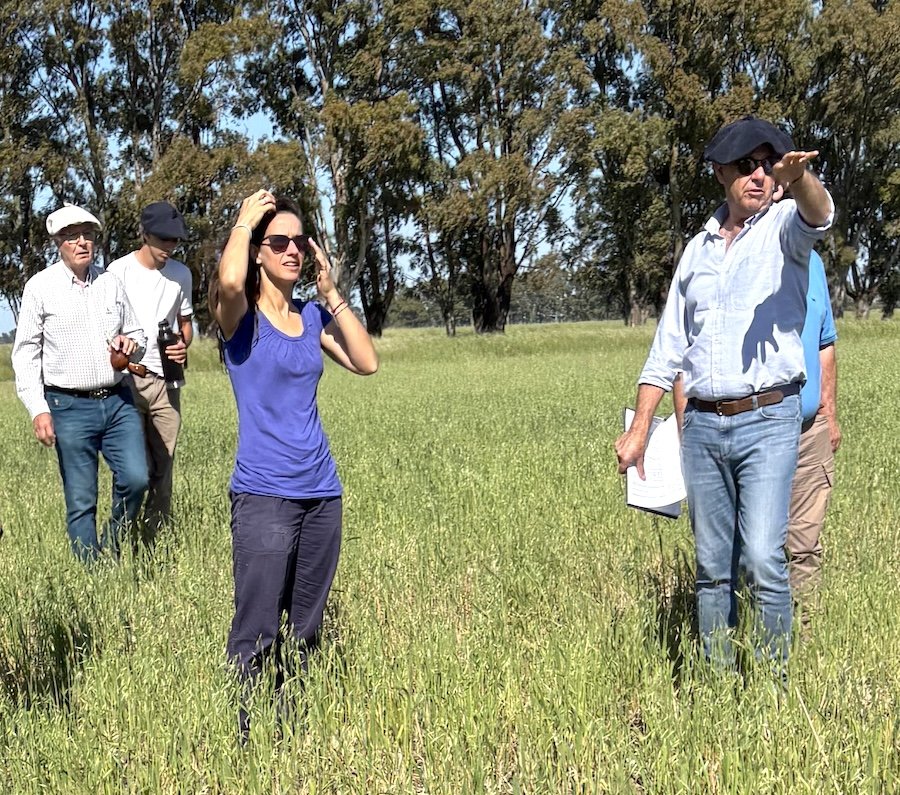
Dr. H. Montero (at left), a grandson, his daughter, and their herd manager (On Rt.)
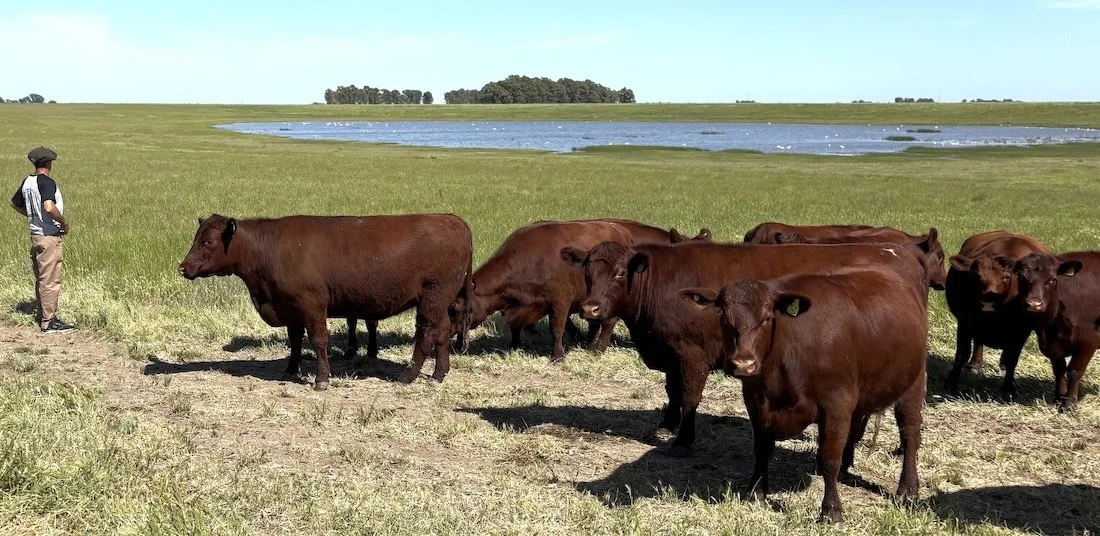
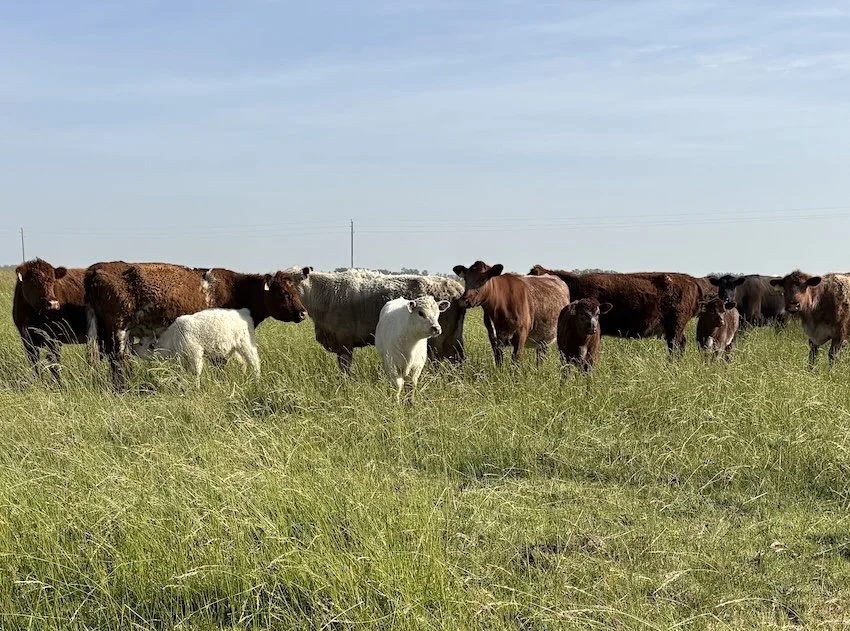
They constantly strive for improvement in the herd by experimenting with different breeds to maximize hybrid vigor, meat quality, growth rates, and weaning weights. Their in-house system is what EPDs were originally designed to do—compare animals in a herd being raised under the same environmental and management system, rather than simply used as a marketing tool with no real relevance in other herds. We viewed their records and they were quite impressive. We saw a large group of replacement heifers which epitomized what a good group of Shorthorn heifers should look like. There was tremendous consistency in the group and they perfectly fit the type of cow that Dr. Montero seeks to produce.
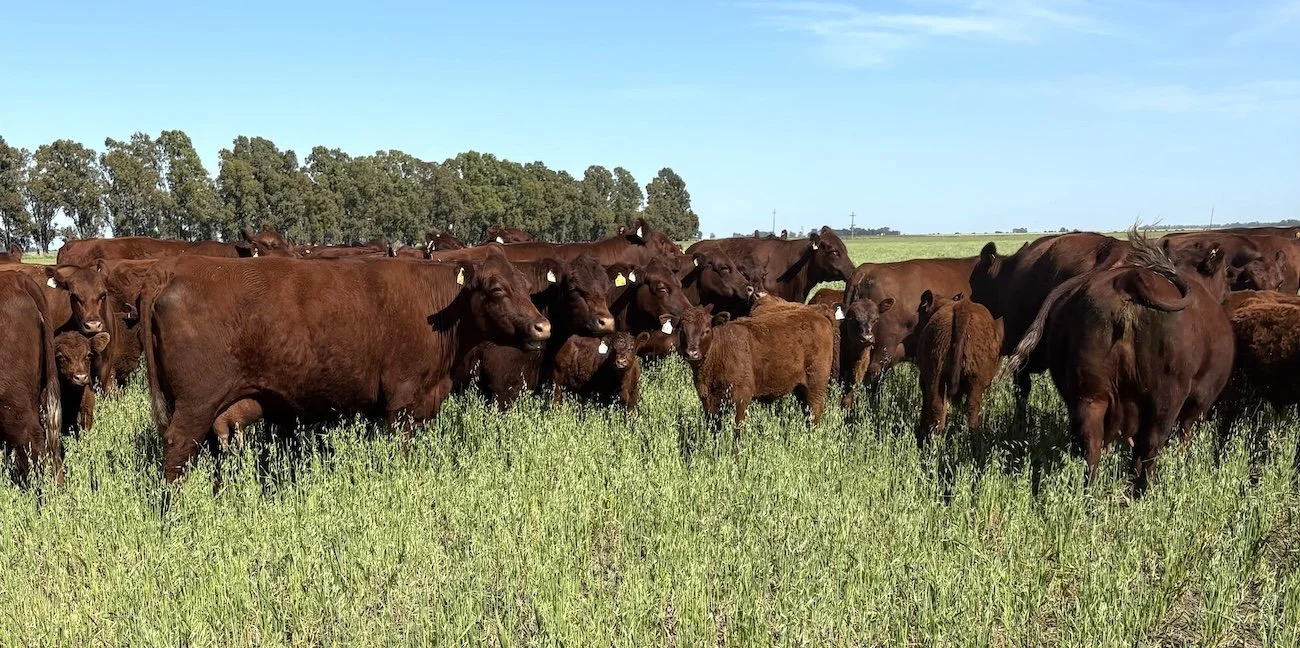
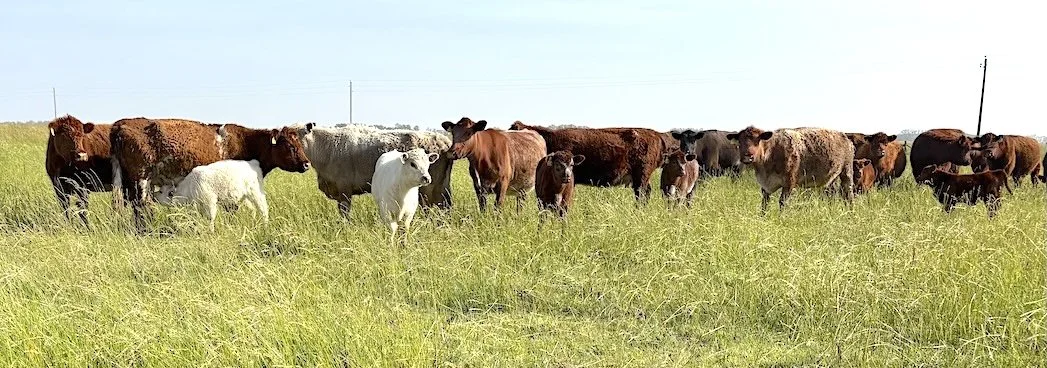
Cows & calves at Cabaña “El Campito”. (See also the picture just below the title at the top of this article).
They are currently experimenting with Australian Murray Greys through crossbreeding to produce higher quality, faster growing steers. Because of our lack of information on Murray Grey’s we did some research on Australian Murray Greys when we got home. Several things stand out on the Australian Murray Grey website. Murray Greys have many positive traits that could be useful through crossing with Shorthorn. One interesting fact about the Murray Grey breed association in Australian is they have utter distain for the whole EPD/EBV marketing gimick. Instead they use an on-farm evaluation system specific to each individual farm. That allows a buyer to compare management systems and find breeders that are similar to their own management, increasing their chance of success. There is no question Dr. Montero understands that the individual herd approach is far superior to the marketing ploy of many breed associations that “compare apples to oranges”.
5. Joaquin & Fermin Echazarreta (Brothers)
Ranch: Cabaña La Balbina de Echazarreta Tandil, Argentina
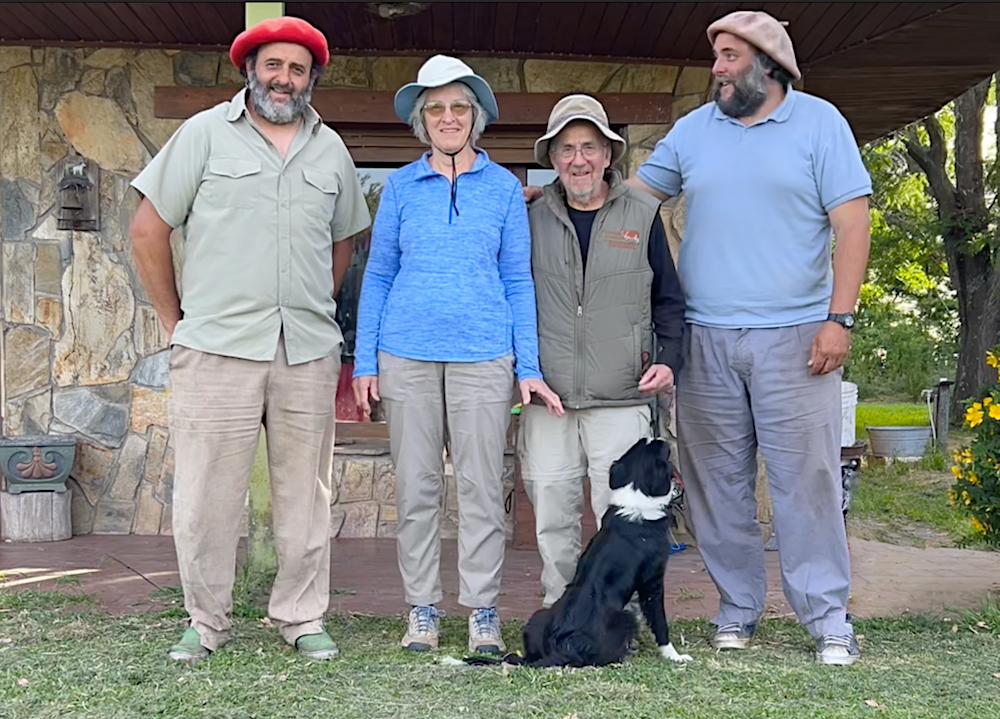
L. to Rt.: Fermin Echazaretta, Sue & Joe Schallberger, Joaquin Echazaretta
The Echazarreta family have raised Shorthorns for over 130 years and have been a mostly closed herd using their own home grown bulls to maintain both the purity and the phenotype that they desire for their commercial meat business which includes the making of several different types of sausage as well as various cuts of meat. They strongly believe in the grass fed model and believe their Shorthorn herd maximizes the potential when it comes to producing quality beef. They operate a fully integrated Shorthorn business that incorporates the production of grass fed Shorthorn beef with their own processing plant and their own meat shops. They also engage in several other farming endeavors which balance their cash flow.
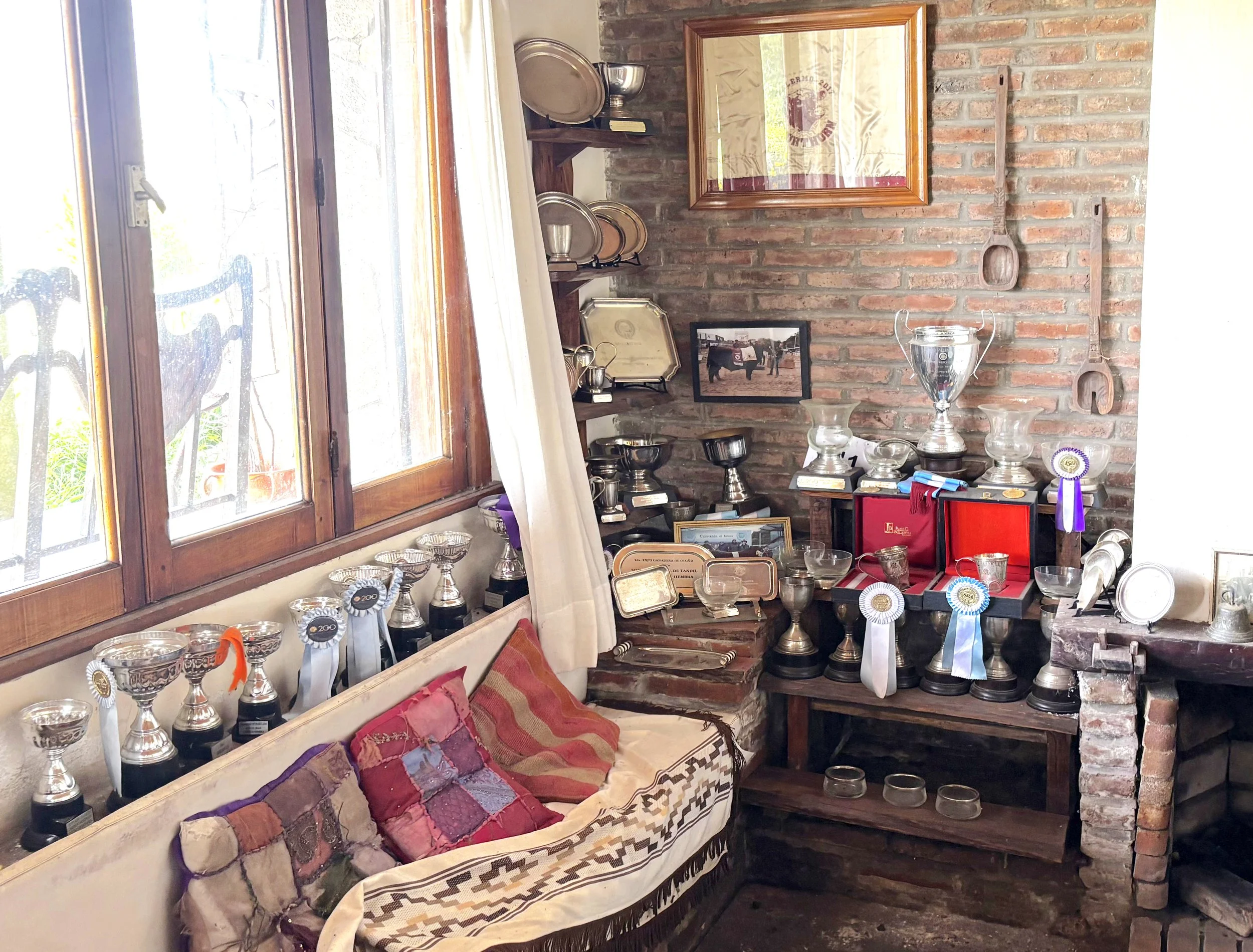
Some of the family’s Shorthorn trophies
Their cow herd numbers 400 and they are pastured on 500 hectares. The Echazarreta family only raises Shorthorns. They have often shown their Shorthorns at Palermo (with much success over the years). The Palermo livestock show has taken place in the greater Buenos Aries area every year since July, 1875. Joaquin said the Shorthorn show placings have started to move in the direction of Traditional Shorthorns as the interest in that type of Shorthorn mushrooms worldwide. Joaquin made it perfectly clear that his family has absolutely no interest in the Modern Shorthorn genetics that are promoted in the USA.
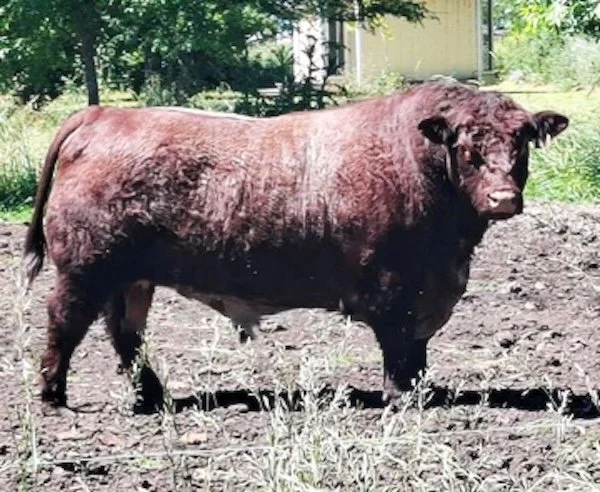
Echeza x105 CHÑ 52 “Gorrion”, 3rd Place Champion bull at Palermo National show in July 2025
Like many long established livestock families in Argentina the Echazarreta cattle business is a family operation. For instance their diversified meat market in Tandil, which we were privileged to visit, has a family member running it and other family members are involved with advertising and marketing. It is a terrific outlet for their grass-fed beef. We were impressed by the marbling we saw in the different cuts of Shorthorn beef that were on display. Also the store displays were very professional along with an attractive exterior neon sign. The fact the meat market is located on a corner in one of the upscale neighborhoods in Tandil (population of 150.000) also helps with their sales.
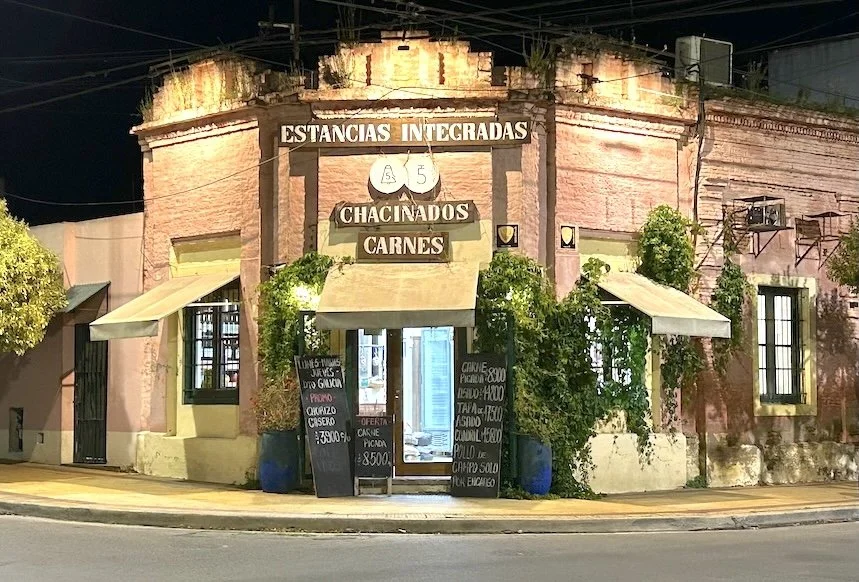
Echezaretta Family Meat Market in Tandil, Argentina
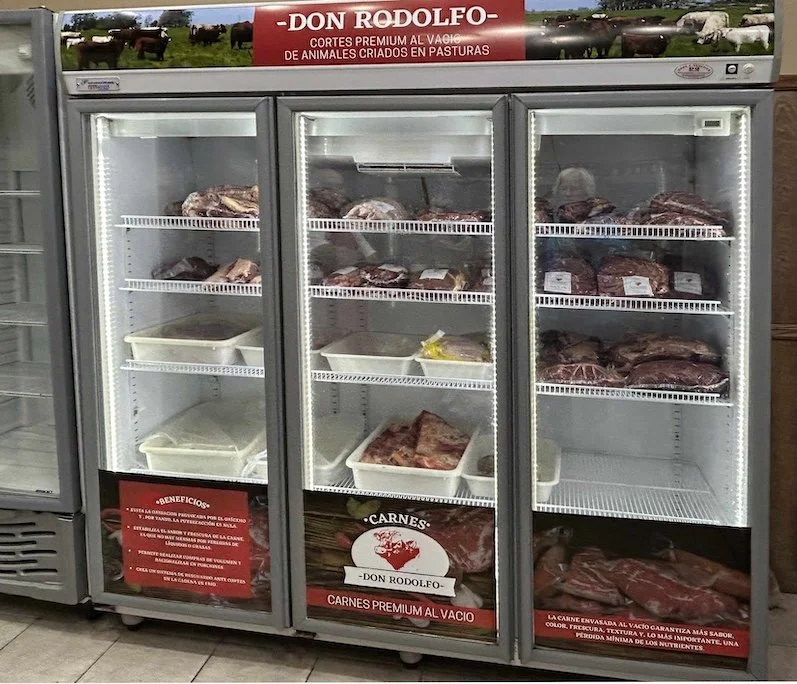
There is no question that the business model of the Echazarreta family has been very successful. Their totally integrated business model gives them better opportunities to control costs and adjust prices instead of being at the mercy of wholesale livestock buyers. The fact they are achieving this in Argentina makes it that much more impressive.
6. Ignacio Landivar
Ranch: Cabaña San Miguel Ayacucho, Argentina
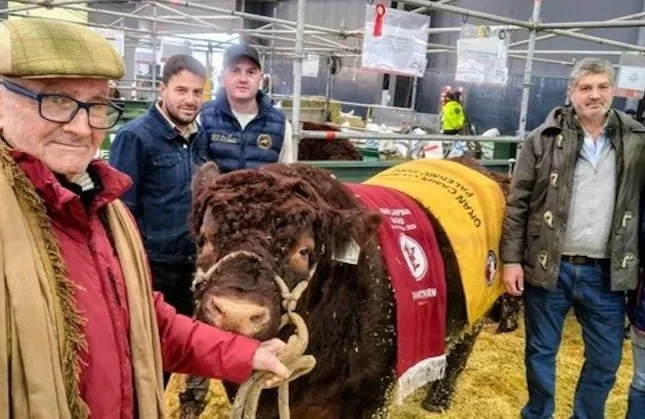
3 generations of the Landivars (Ignacio on Rt.) with their family’s Grand Champion bull at National Show in Palermo, Argentina
The Landivars are long-time breeders of Shorthorns and are well-established in the Argentine cattle industry. Ignacio has managed the herd for a number of years. They have had a mostly closed herd by utilizing their own bulls; however Ignacio is dedicated to gradually improving his Shorthorns by utilizing traditional Shorthorns via artificial insemination and embryos. He works closely with Dr. Narbaitz in trying to improve his herd. He is not as dedicated to the red color as many Argentine Shorthorn breeders, which further indicated his desire to improve the genetics of his herd without the constraints of just solid red. He mentioned some of the problems associated with the introduction of Lincoln Reds into the Argentine herd book that have cropped up in his herd that he is diligently working to eliminate. He listened attentively and asked many questions as different aspects of older Shorthorn genetics were discussed. He is meeting the challenge all Shorthorn breeders face: retaining and enhancing the positive traits of the breed while confronting the environmental challenges which can disrupt any cattle operation.
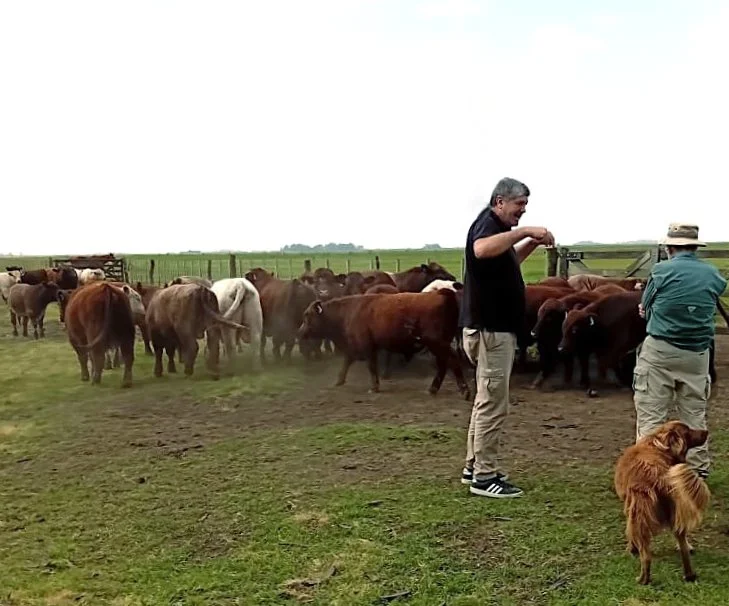
Ignacio with yearling bulls
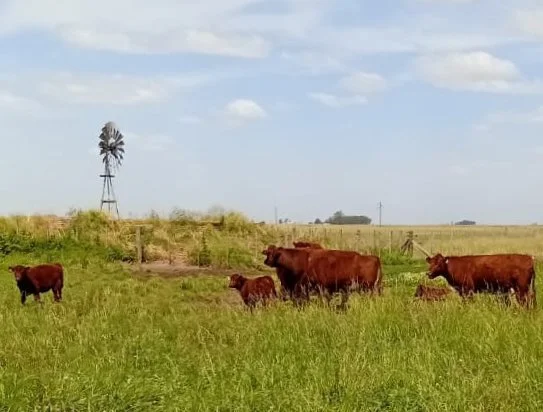
He has approximately 380 cows on 400 hectares of pasture, and also grows corn and winter greens. Unfortunately because of the marshy conditions from this year’s heavy spring rains & flooding, it was difficult to see all of his herd up close even though we were in a 4-wheel drive vehicle. He indicated that calving had been tough this spring, which was understandable. It speaks well to his breeding program that his Shorthorns looked so good despite the difficulties they had faced due to the weather.
There were many outstanding individuals in his cow herd that anyone would be proud to own. Like most of the Shorthorn calves we saw in Argentina, Ignacio’s calves had the thickness and muscling that everyone is looking for. He sells both finished steers and bulls through different marketing outlets.
He values cows that are fertile and do well just on pasture. He also values longevity and told a story about a bull that had been bred and used by his father for several years, sold to additional Shorthorn breeders, and then was again up at auction at 17 years of age. His father recognized the name of the bull and was astounded that the bull was still alive. The bull continued to breed cows until he died at 23 years of age.
7. Claudia Cagnoli, DVM PhD
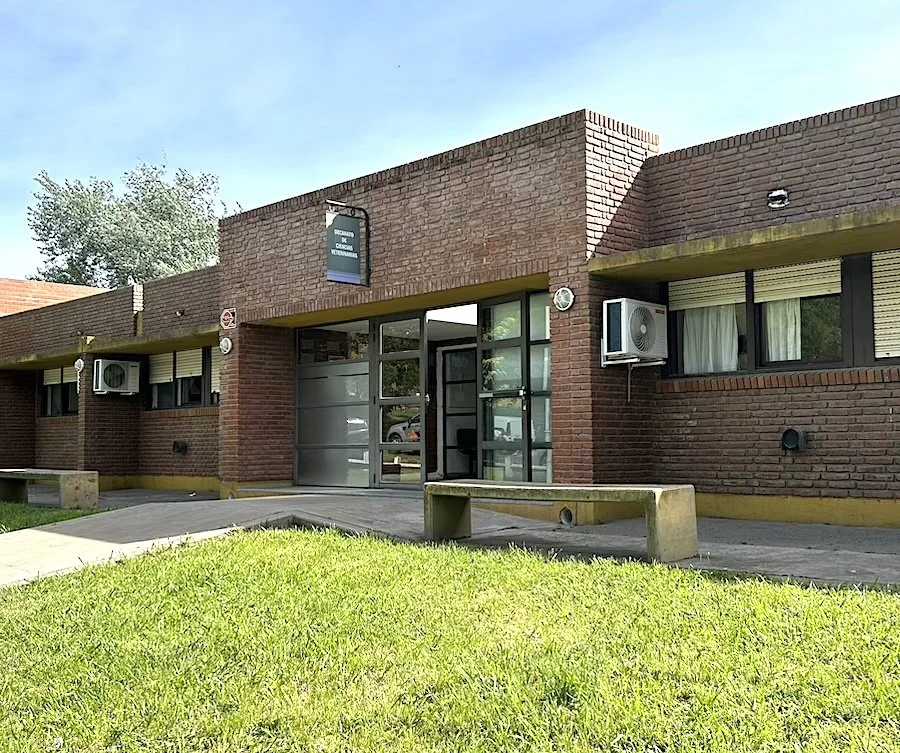
Admin. Building for the Veterinary Department at UNICEN, Tandil
Veterinarian at Facultad de Ciencias Veterinarias Tandil, Argentina
National University for the Central Province of Buenos Aries (UNICEN)
There are 8 Veterinary Schools scattered across Argentina. Dr. Juan Martín Narbaitz made arrangements for us to visit the Veterinary School in Tandil, Argentina. Dr. Claudia Cagnoli was kind enough to give us a personal tour of the many Departments within the Veterinary School.
The Tandil Veterinary School has approximately 1000 students with the full program to become a Veterinarian taking 6 1/2 years. Most Tandil students are involved in Large Animal medicine although there is a booming pet animal practice throughout Argentina. (One of the more common dog breeds seen in Argentine towns were Greyhounds which was very surprising.) A major difficulty for the Veterinary education program in Argentina is tight funding so that the number of faculty at the Veterinary Schools is limited, which also reduces the number of patients being seen at the university hospitals. The diminished staffing for clinical rounds results in limited hands-on experience by the students; however, as always, the dedication of the students and faculty for animal health and welfare prevails over the shortcomings.
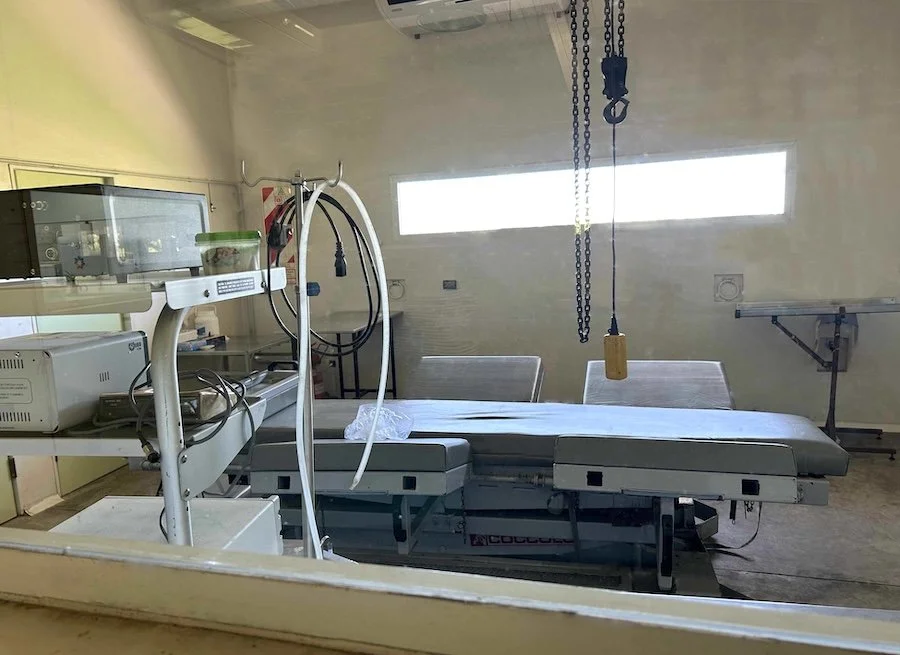
Veterinary School Large Animal Surgery
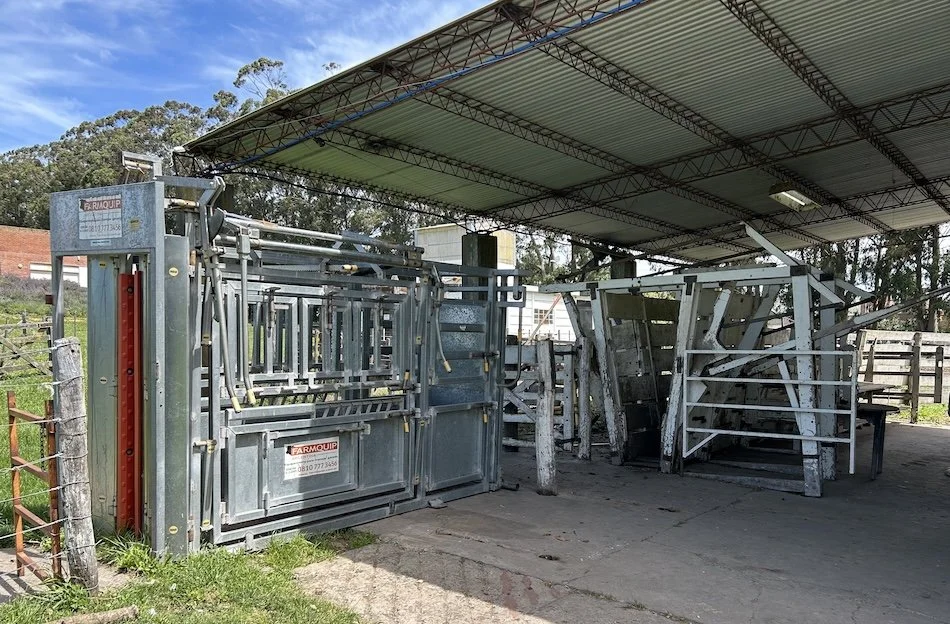
Traditional wooden chute in back, and recently acquired new metal chute in foreground.
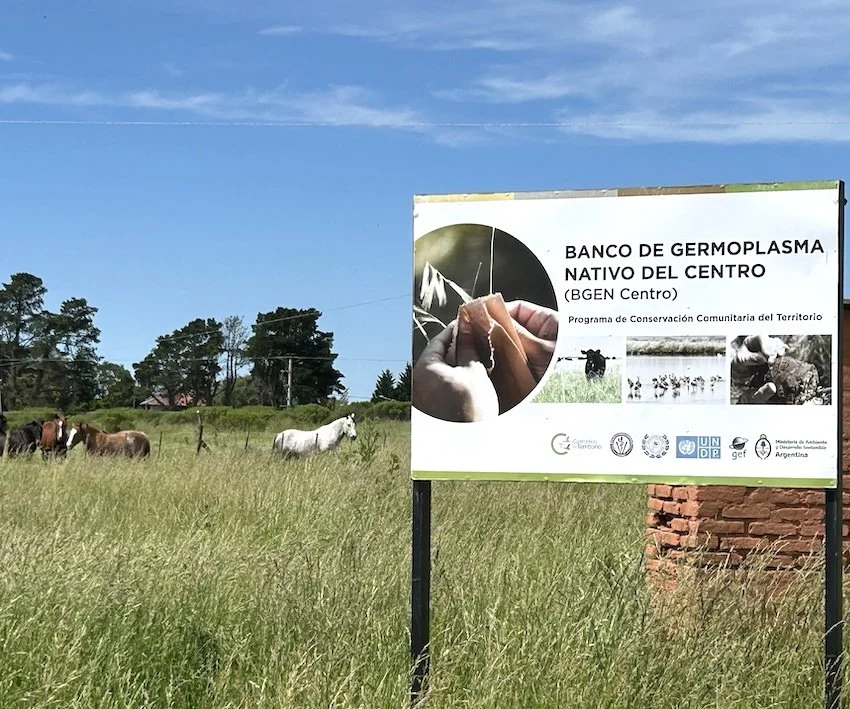
Besides the usual Veterinary Medicine related departments, they also have research programs—one of which is looking at various native Argentine plants which might provide good animal forage with more draught resistance and less need for chemical applications. They maintain a germplasm bank for various Argentine plants.
Post Script:
We were impressed by the quality of Shorthorns we saw throughout Argentina and the dedication of the different Shorthorn breeders we interacted with. They are progressive in their approach to the Shorthorn breed utilizing contemporary technology to produce a better beef animal. When we consider the many different governmental issues they have had to deal with over the years, and must continue to navigate, one has to be in awe of their dedication to cattle raising and to the Shorthorn breed. Hopefully as the latest Argentine government attempts to open up trade opportunities for marketing Argentine beef there will be a new era in the Argentine Shorthorn Industry.
Lastly we want to thank all the Argentine Shorthorn breeders that hosted us over our “Shorthorn Travels In Argentina”. Their kindness will not be forgotten. Overall our trip included a wide variety of “adventures” that all contributed to a very memorable journey.